Big Green Worms on My Tomatoes
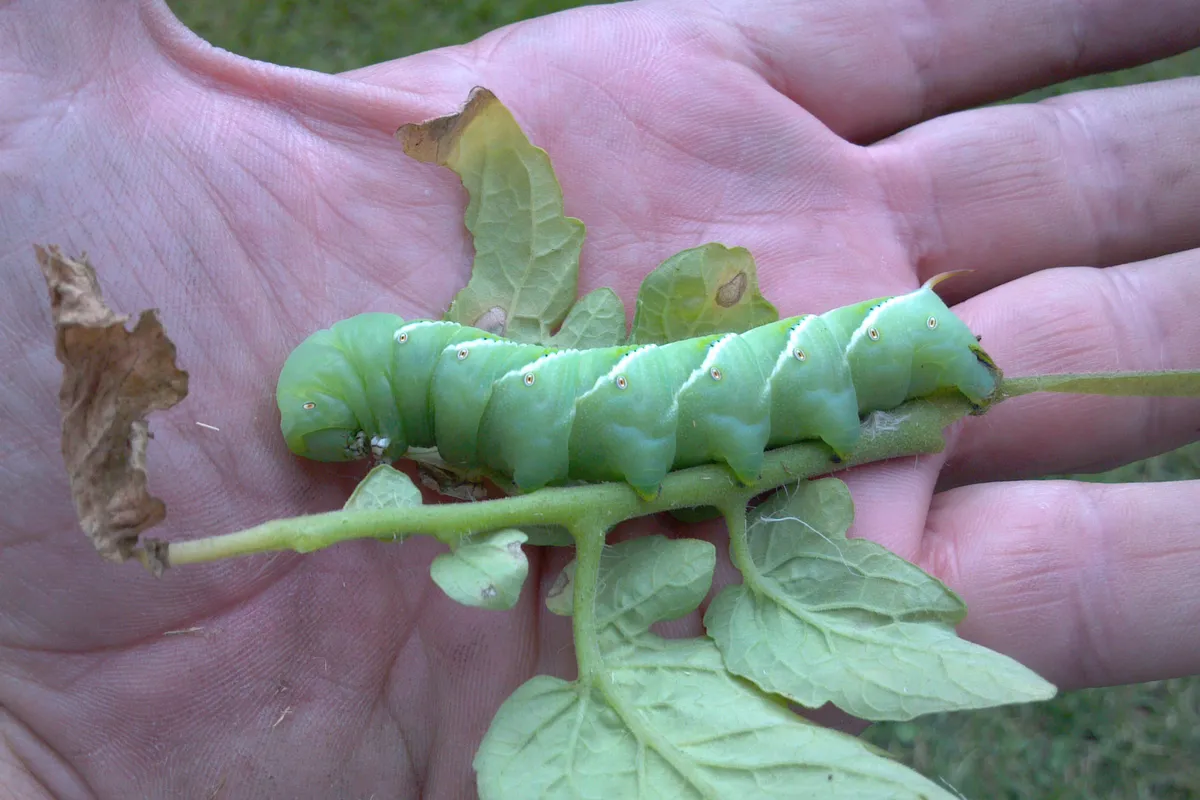
The big green worms stripping tomato plants are usually hornworms, caterpillars that feed fast but are vulnerable to a targeted bacterial spray while young. Monterey B.t. RTU works when caterpillars eat treated leaves, and hand picking plus a night torch check handles the large ones already present.
The short answer
Hand pick the large hornworms you can find, check again at night with a torch, then spray foliage thoroughly with Monterey B.t. RTU to protect the plant from young larvae. It holds 4.6 stars from 183 reviews on Home Depot (November 2026), with 94 percent of reviewers recommending it. Leave hornworms covered in white cocoons alone.
Why does this happen?
A tomato hornworm can eat a striking amount of foliage in a day, yet spend the same day nearly invisible against the stems it feeds on. Gardeners often find the droppings and stripped stems before the caterpillar. The worms start small, grow to several inches, and feed most heavily as they enlarge, so a plant can go from a few chewed leaves to serious defoliation in a short spell of warm weather.
Bacillus thuringiensis kurstaki, shortened to Bt, works inside the caterpillar gut after treated leaves are eaten. Feeding stops quickly, although the caterpillar may stay visible for a while. Sunlight breaks Bt down and rain can wash it off, so fresh coverage and repeat applications matter. It works best on young larvae. A four inch caterpillar stripping a plant today should be picked off by hand rather than sprayed and waited on.
The fix, in order
Work down the list: free and cheap steps first. Stop when the plant turns the corner; the product is only for what the free steps cannot do.
Free step
Find them with droppings, damage, and a night check
Look for dark droppings on leaves and the ground, stripped stems, and then search the plant slowly. A torch or blacklight check at night often reveals hornworms that daytime camouflage hides. Pick off the large caterpillars you find and drop them into soapy water, checking neighbouring tomato and pepper plants as well.
The product step
Spray foliage with Monterey B.t. RTU
Coat tomato foliage thoroughly, including undersides, with Monterey B.t. RTU following the label, focusing on plants where small caterpillars are feeding. Because the spray must be eaten, missed leaves are unprotected leaves. Apply when caterpillars are young where possible, and repeat after rain and as new growth appears, since sunlight degrades the active material.
The product for this step
Monterey B.t. RTU
Habit step
Reinspect every few days in tomato season
Return to the plants every few days, remove any large caterpillars by hand, and renew spray coverage on new growth. Hornworm moths keep arriving through the season, so one clean week does not mean you are done. A short check every few days costs fewer leaves than finding a new infestation from stripped stems.
The evidence, in tiers
Tier 1 · The method
The research describes Bt kurstaki as the standard targeted answer for hornworms: it must be ingested, works best on young larvae, and is degraded by ultraviolet light, which is why repeat application timing is part of the method.
Tier 2 · This product
Monterey B.t. RTU holds 4.6 stars from 183 reviews on Home Depot (November 2026), with 94 percent of reviewers recommending it.
We have not released hornworms on a tomato plant for this guide. The hand pick first, spray for young larvae method follows the ingestion mechanism and limits named in the research.
Tier 3 · What owners report
Owners report that feeding damage stops after caterpillars eat treated foliage. The common disappointments come when a spray is used on a very large caterpillar, applied once in strong sun, or not renewed after rain.
The alternatives, conceded where they win
| Option | What it is | The honest verdict |
|---|---|---|
| Monterey B.t. RTU | Ready to use Bt caterpillar spray | The pick: targeted protection for foliage against young caterpillars, ready to use without mixing, for the weeks when moths keep laying eggs. |
| Hand picking alone | Searching and removing caterpillars by hand | Wins for the large caterpillars already visible and costs nothing; it loses as the only method across a row of plants, because small caterpillars are easy to miss until they have fed for days. |
| Broad insecticide spray | General garden insect spray | Wins on shelf familiarity for mixed pest problems; it loses here because the problem is one identifiable caterpillar with a targeted option, and broad sprays also hit the wasps that parasitise hornworms for free. |
The honest price comparison
The honest comparison is a defoliated tomato plant and the harvest it will not make this season. Hand picking plus one ready to use spray bottle, renewed sensibly, protects the plants already grown rather than paying to replace them and start again.
Where it falls short
These weaknesses come from the product's own reviews, not from a rival's marketing. Read them before you buy.
- It must be eaten to work, so spray sitting on uneaten leaves does nothing for that caterpillar.
- It works best on young larvae and is a weak answer to a large caterpillar already stripping a plant.
- Sunlight degrades it and rain can remove it, so repeat applications are part of the cost and effort.
- The review count is modest, even though the recommendation rate in that record is very high.
The product, in short
Monterey B.t. RTU
Questions people ask next
Why can I not find the worm that is eating my plant?
Hornworms match tomato stems well and often feed in sheltered positions during the day. Look for droppings first, follow them upward, and try a torch check at night, when the caterpillars are easier to spot moving and feeding on the foliage.
What are the white cocoons on some hornworms?
They are the cocoons of a parasitic wasp whose larvae fed inside that hornworm. The hornworm is finished as a serious feeder, and the wasps that emerge will seek other hornworms. Leave those caterpillars in place as free control.
How fast does Bt stop the damage?
After a caterpillar eats treated foliage, feeding stops relatively quickly, though the caterpillar may remain visible before it dies. Judge the spray by new damage stopping over the following days, and remove large caterpillars by hand instead of waiting on them.
Do I need to spray the whole garden?
No. Focus on the tomato and related plants where caterpillars are feeding or expected, with thorough coverage including leaf undersides. Renew after rain and on new growth. Spraying unrelated plants adds effort without protecting the leaves actually at risk.
Home Depot product record for Monterey B.t. RTU (November 2026) · Product label directions for Bacillus thuringiensis kurstaki use on tomatoes
The Fix JournalCase 21Plants & Garden