Dog Terrified of Thunderstorms and Fireworks
Fear of loud noise is a real panic problem in dogs, not stubbornness, and it often gets worse as dogs get older. A pressure wrap helps some dogs. This page explains which dogs it helps, and when medication from the vet is the better answer instead.
The short answer
Try the wrap, but know what to expect. Put a ThunderShirt on snugly before the storm or the fireworks start. It calms a good number of dogs and does nothing for others. It holds 4.2 stars from 3,243 ratings on Chewy (November 2026). We quote that middling score on purpose. For dogs that truly panic, anti-anxiety medication from the vet is the treatment. The wrap is the first, cheapest thing to try.
Why does this happen?
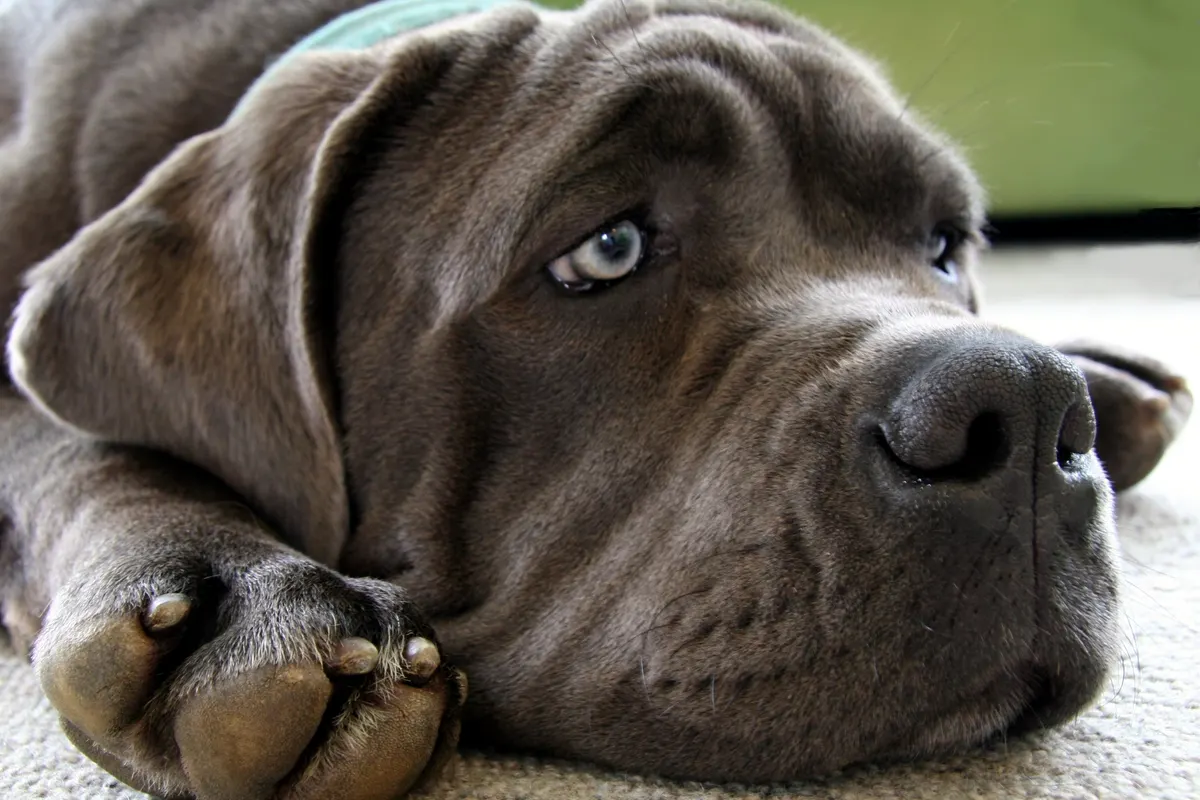
Noise aversion in dogs ranges from mild unease to a panic state with a full stress physiology: panting, pacing, drooling, destruction at exits, and self-injury in severe cases. It is not disobedience. Comfort alone does not usually fix it, because the dog is not pretending to be afraid. The dog really is afraid. The fear tends to spread to other noises and get stronger each time it happens. Each storm can make the dog more sensitive. That is why it helps to start early, use more than one kind of help, and plan ahead for July 4th instead of just getting through it. Putting up with it helps less.
Pressure wraps apply the deep-pressure principle known from swaddling and from weighted blankets in human use: constant gentle torso pressure that some dogs (and their measurable stress indicators) respond to with settling. The evidence is mixed. Owners mostly report that it helps. Controlled studies are smaller and less clear. The fairest reading is that it calms some dogs, perhaps a third to a half by owner report, and has no effect on the rest. That is why the wrap makes sense as a cheap, safe first thing to try. If it does not help, it has cost little, and the next step, below, is clear.
The fix, in order
The steps run in order, cheapest first. Stop at the step that works. The product comes last, and only where the free steps run out.
The product step
Fit and introduce the wrap on a calm day
Fit the ThunderShirt snugly per its sizing (you should not fit a flat hand easily under it), put it on during pleasant, calm moments with treats several times before any storm. If you first put the wrap on as thunder starts, the dog learns that the vest means something frightening is coming. If you first put it on on sunny days, it is just clothing to the dog.
The product for this step
ThunderShirt Classic anxiety wrap
Free step
Build the storm station
An interior room or covered crate (for crate-comfortable dogs), white noise or music up, curtains drawn against lightning flashes, and water available. The wrap is only one part of the help. The room or crate is the setting it works in. Set both up before the storm is due, not after the first clap of thunder.
Free step
Be boringly calm and present
Your dog takes its cues from how you act. Stay calm and unhurried, and stay nearby without fussing frantically, which can look to the dog as if you are alarmed too. Let the dog choose proximity; do not drag it out to face the noise or shut it away alone to 'deal with it'.
Habit step
Log the response and escalate on evidence
Note what helped and how much, per event. If the panic stays severe across two or three storms or fireworks events even with the wrap on and the quiet room set up, take your notes to the vet. Medication for occasions like these is the next step. Using it is a kindness, not a failure.
The evidence, in tiers
Tier 1 · The method
Steady pressure is a documented way to calm both people and animals. For fear of noise in dogs, the evidence for wraps comes mostly from owner reports, with few controlled trials. This page says so openly instead of claiming more certainty than there is.
Tier 2 · This product
The ThunderShirt Classic holds 4.2 stars from 3,243 ratings on Chewy (November 2026). The pattern in the ratings, many strong positives and a real minority who saw no effect, matches what we said in the short answer above: the wrap helps some dogs and not others.
We have not wrapped a test dog for this guide. We recommend the wrap as something to try, with a clear next step if it fails, because that is what the evidence for this kind of product supports.
Tier 3 · What owners report
Owners whose dogs are helped describe a dog that lies down and sighs within minutes of the wrap going on. Owners whose dogs are not helped describe an unchanged dog in a vest. Both kinds of report are believable. That is why the note-taking step matters: what your dog does matters more than the average.
The alternatives, conceded where they win
| Option | What it is | The honest verdict |
|---|---|---|
| ThunderShirt wrap, introduced early, inside a storm station | Deep pressure as the first-layer trial | The pick as step one: drug-free, reusable for years of storms and fireworks, and its failure is informative rather than costly. |
| Veterinary situational medication | Prescribed anxiolytics for event days | The winner for dogs that truly panic, and the step to move to if the wrap does not help. It is not the best first move only because it takes a vet visit and careful dosing, and the wrap is enough for the large share of dogs it helps. |
| Calming chews and supplements | L-theanine, melatonin, and herbal blends | Not our main recommendation. The evidence for chews is the weakest in this group and the marketing the strongest, so we would not rely on them alone for a frightened dog on the Fourth of July. For mild cases, you can use them as an extra; discuss that with your vet. |
The honest price comparison
Compare the cost fairly with a vet visit. An exam plus medication for occasions like these runs $100 to $200, and for dogs that panic it is money well spent. The $40 to $50 wrap is the trial that tells you whether your dog is in the milder half that does not need that appointment. When it works, it serves every storm for years.
Where it falls short
The weaknesses below are taken from the product's own review record. They are printed here because the recommendation is.
- A real share of dogs, plausibly half, get little from it. The 4.2-star score reflects that split, and we say so here in advance.
- It must be fitted and introduced before events; a first fitting during a storm is a wasted trial and sometimes a negative association.
- It is not a substitute for medication when a dog has a true phobia. Putting off the vet for a severely affected dog while you repeat wrap trials is the mistake the step above, about taking your notes to the vet, is there to prevent.
The product, in short
ThunderShirt Classic anxiety wrap
Questions people ask next
How tight should it be?
Snug, like a swaddle: firm contact around the torso without restricting breathing or movement. Follow the maker's sizing by chest measurement and weight, and size down exchanges are common enough that buying where exchanges are easy is practical advice.
When do I put it on for fireworks?
Before the first bangs, ideally an hour before the expected start, in the quiet room you have set up, with the white noise or music already playing. Steady pressure works better as prevention than once the dog is already panicking.
Can the dog wear it all night or all day?
For the length of a storm or fireworks show, yes. Do not leave it on indefinitely. Take it off between events to check the skin, let the dog move and go to the toilet normally, and keep putting it on during calm times on calm days so the dog links it with calm.
My dog is scared of the wrap itself. Forcing it?
Never. Some dogs dislike wearing anything. If you want to keep trying, get the dog used to it slowly over days, with treats. Or accept that this dog will not accept a wrap and go straight to the quiet room and the vet options. A frightened dog in a forced vest is worse off, not better.
Veterinary behavior literature on canine noise aversion and pressure wraps · Chewy product record for ThunderShirt Classic (November 2026)
The Fix JournalCase 11Pets