Puppy Chewing Everything: Teething, Boredom, or Both
Puppies chew because of teething discomfort, exploration, and too little stimulation. The fix is a rotating stock of approved chew targets matched to the teething stage, not a deterrent sprayed on your baseboards.
The short answer
Let the chewing happen, on your targets: build a rotation of KONG Puppy rubber chews, stuffed and frozen for teething days, and swap them every day or two so they stay interesting. Bitter sprays are the extra, rated honestly: the spray class sits at 3.5 to 3.6 stars on Chewy (November 2026), which is why this page leads with targets and management, not taste aversion.
Why does this happen?
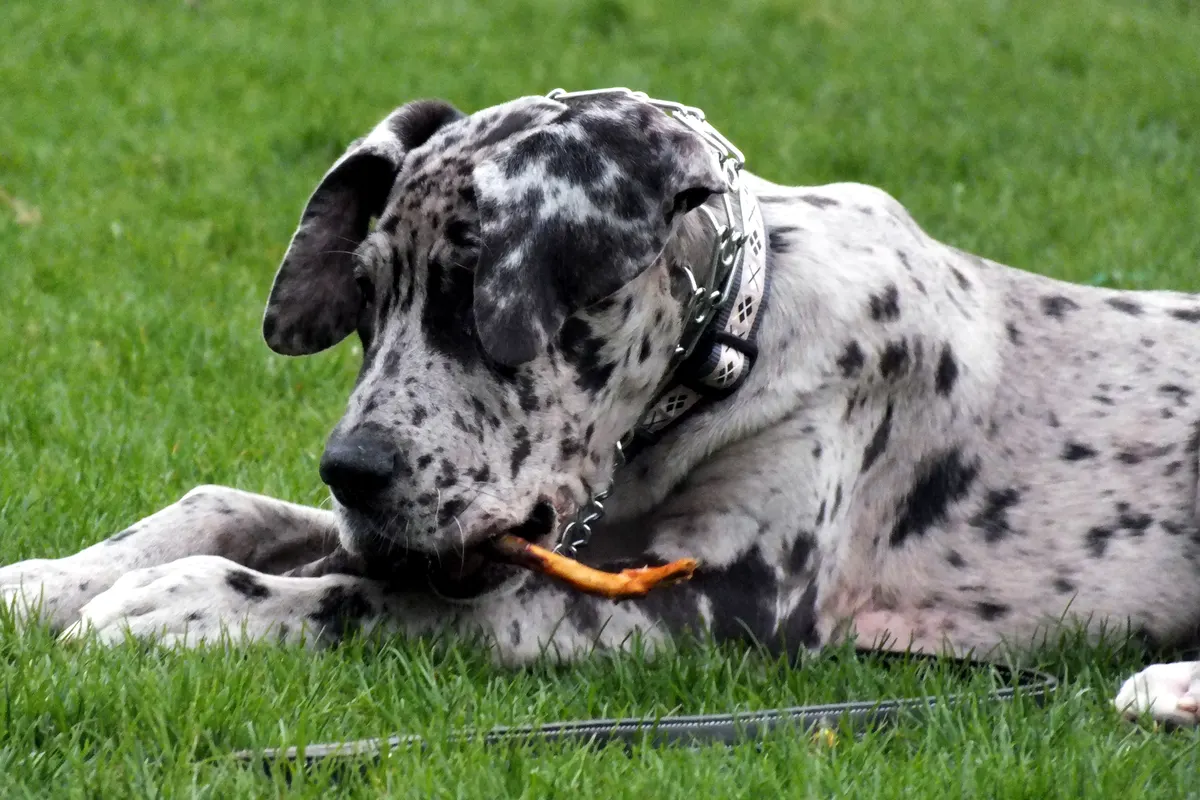
Puppies chew for several reasons at once, and the mix changes by week. Teething runs roughly from 3 to 6 months as adult teeth come in, and chewing pressure relieves gum discomfort the way it does in human infants. Exploration is learning: a puppy's mouth is its main tool for sampling a world it is still cataloguing. Boredom and under-exercise add a third reason, and separation anxiety a fourth, shown by its pattern: destruction at exits, on departure, with signs of distress. Each reason has a different main fix, which is why a single deterrent spray disappoints everyone. It addresses none of them.
The lasting answer is how the puppy's world is set up: plenty of legal, interesting chewables, and few reachable illegal ones, because a puppy cannot be trained by removing every chance to fail. Stuffable rubber toys earn their place by duration. Frozen stuffing turns a two-minute chew into a twenty-minute occupation, and rotation beats the loss of novelty that makes yesterday's toy invisible and the chair leg, which changes as it splinters, always fresh.
The fix, in order
The steps run in order, cheapest first. Stop at the step that works. The product comes last, and only where the free steps run out.
Free step
Puppy-proof the reachable world
Put shoes, cables, remotes, and children's toys up or behind gates. Make baseboards and chair legs hard to reach where you can. Management first is not surrender. It is how learning happens without practicing the wrong behavior.
The product step
Build and rotate the chew stock
Three to four KONG Puppy class rubber chews, one or two in play, the rest stored: rotate every day or two. Stuffed with a smear of peanut butter or wet food and frozen, a chew becomes a project. Match size and rubber softness to the puppy's age and jaw, per the maker's sizing, because a too-soft toy in a power-chewing mouth is a swallowing risk, not a toy.
The product for this step
KONG Puppy class chew rotation (rubber chew toys)
Free step
Trade, never chase
When the puppy takes an illegal object, offer a legal chew with genuine enthusiasm and trade. Chasing makes the illegal object a game with a prize (your attention at full sprint). The trade builds the association that legal chews summon celebration.
Habit step
Spend the energy budget
A tired puppy chews dramatically less: age-appropriate exercise, short training games, and sniff walks are chewing prevention delivered through the calendar. The evening destruction hour in most homes is an under-spent puppy announcing itself.
The evidence, in tiers
Tier 1 · The method
The teething timeline and the management-plus-redirection protocol are the standard guidance of veterinary behavior and puppy-rearing literature (the AVMA and major veterinary schools publish materially identical advice).
Tier 2 · This product
The KONG Puppy line's record is carried by its class position (it is the reference stuffable chew in the category) rather than a single star figure here. The comparison class is quoted with its number instead: bitter sprays at 3.5 to 3.6 stars on Chewy (November 2026).
We have not raised a test puppy for this guide. The protocol is the veterinary standard, and the product choice rests on durability class and stuffability, the two functional requirements.
Tier 3 · What owners report
Owners report rotation as the variable they discover: the same toys, cycled, hold attention that a static toy box loses in a week. Frozen stuffing is the most praised single trick in the category's reviews.
The alternatives, conceded where they win
| Option | What it is | The honest verdict |
|---|---|---|
| KONG Puppy rotation, stuffed and frozen | Sanctioned targets engineered for duration and novelty | Our pick: it feeds the real reasons (teething pressure, occupation, novelty) instead of fighting the location of the symptom. |
| Bitter apple deterrent sprays | Taste aversion applied to furniture and objects | Wins as an adjunct on one high-value target during training, and some puppies do respect it; it loses as the system at 3.5 to 3.6 stars on Chewy, because a large minority of puppies ignore or enjoy the taste and the underlying engines run untouched. |
| Rawhide and natural chews | Edible chew products | Wins on palatability for many puppies; it loses on safety supervision (choking and blockage risk as pieces soften and detach) and on duration, the currency this problem trades in. Edible chews are treats with a chewing phase, not occupation. |
The honest price comparison
Compare the deposit and the drywall: puppy damage in rentals and furniture runs to hundreds, and a single foreign-body surgery runs $2,000 and up. A $40 rotation of the right rubber is the cheapest insurance policy in the puppy's first year.
Where it falls short
The weaknesses below are taken from the product's own review record. They are printed here because the recommendation is.
- Supervision is non-negotiable: any chew toy can be defeated by a determined jaw, and pieces must be taken away as toys wear. Size up as the puppy grows; yesterday's toy is undersized before it looks it.
- It does not treat separation anxiety, whose destruction pattern (doors, windows, departure-timed) needs a behavior protocol and sometimes a vet, not a better toy.
- Rotation and stuffing are labor: a household that will not freeze a KONG owns a $12 paperweight, and this page would rather say so than collect the one-star echo.
The product, in short
KONG Puppy class chew rotation (rubber chew toys)
Questions people ask next
How long does the teething chewing last?
Peak teething runs to about six months, with adult teeth fully in by seven. Exploratory chewing continues through adolescence (to a year and beyond in many breeds), tapering as management and habit set in. Plan for the year, celebrate the taper.
What can I freeze in the KONG?
A smear of peanut butter (xylitol-free, always check the label, as xylitol is dangerous to dogs), plain wet food, or soaked kibble, frozen solid. The freezing multiplies the occupation time, which is the entire trick.
The puppy prefers the baseboard to every toy. Now what?
Add value transfer: make the legal chew appear at the baseboard's location, play with it there, and let the trade game happen at the scene. Also audit the engines: that puppy is often under-exercised or in peak teething pain, and a frozen chew addresses both better than a relocated lecture.
Are antlers or bones a better chew?
They are harder than teeth, and veterinary dentists see the slab fractures to prove it. Rubber in the right durometer yields before enamel does. Save the antlers for the mantel.
Veterinary behavior guidance on puppy teething and chew management · Chewy product records for KONG Puppy and bitter spray class (November 2026)
The Fix JournalCase 07Pets