How Do I Know If My House Air Is Too Dry or Too Humid?
One $12 instrument answers this question for the whole house: a hygrometer tells you the number, and the number tells you which of four problems you actually have, and which machine, if any, will fix it.
The short answer
Measure first, and the answer is a number: put a ThermoPro TP49 hygrometer in the room that feels wrong and read it across a few days. Between 30 and 50 percent is the healthy band. Below it, your problem is dry air; above it, damp. Every humidity fix on this site starts from the reading you are about to take, and this page takes it.
Why does this happen?
Nearly every air complaint is a humidity complaint in disguise: the dry throat and cracked skin of winter, the sweating windows and musty closets of a damp house, the dust that will not settle and the static that will not quit are all reports about one thing, water vapor, which our senses read badly. We feel temperature and drafts clearly and humidity mostly through its side effects, which is why houses buy humidifiers for damp problems and dehumidifiers for dry ones, in confident error, every season.
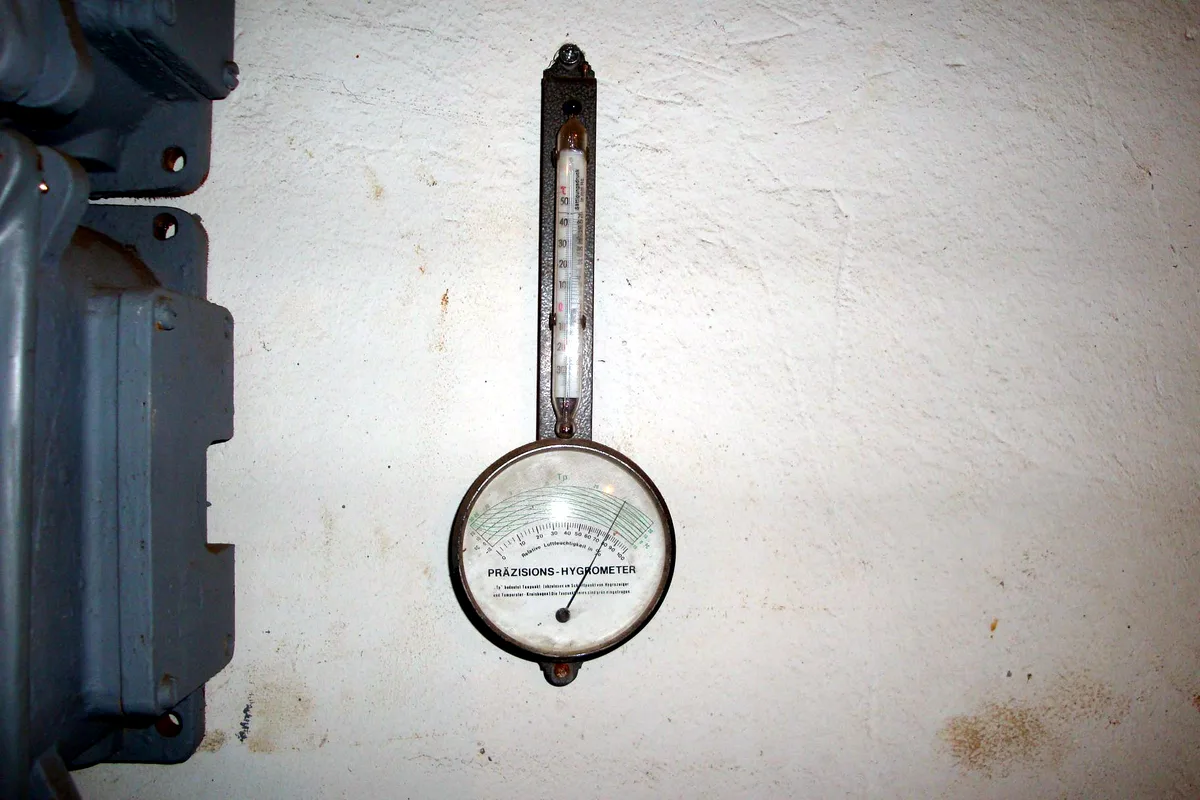
A hygrometer ends the guessing, and it costs about as much as a pizza. Modern digital units are accurate to a few points, which is all a household decision needs: the bands are wide. The reading protocol matters more than the instrument: place it in the room in question, away from the kitchen's steam and the bathroom's door, and read it across days and times, because humidity swings with cooking, weather, and heating cycles. One reading tells you little. A week of readings, high and low, tells you what is actually happening.
Start from your symptom
The fix, in order
Cheapest first, in order. When a step solves it, you are done; the product step is for the cases the free steps cannot finish.
The product step
Buy the instrument, place it well
One ThermoPro TP49 in the room that feels wrong, at breathing height, away from exterior doors, kitchens, and the direct breath of any humidifier or vent. Readings start the day it lands.
The product for this step
ThermoPro TP49 digital hygrometer
Free step
Read the band, not the moment
Check morning and evening for the better part of a week. Your house's number is the range it lives in, especially the overnight bedroom figure and the dampest room's figure. Note them with the season; winter and summer are different houses.
Free step
Route by the number, using the routes below
Below 30: the dry-air page. Above 50: the dehumidifier page. Room fine but windows sweating: the condensation page. One closet musty while the room reads fine: the closet page. The number chooses the tool, which is the entire discipline this page exists to teach.
Habit step
Re-measure after any fix
Whatever you install, the hygrometer stays on duty to prove it worked and to catch the overshoot (over-humidifying is its own problem family). A fix without a follow-up reading is a hope, not a result.
The evidence, in tiers
Tier 1 · The method
The 30 to 50 percent indoor band is the EPA's published guidance; digital hygrometer accuracy at household tier (a few points) is sufficient for band decisions, per the instruments' specifications.
Tier 2 · This product
The ThermoPro TP49 is the category's default recommendation across review outlets for its accuracy at the price tier; this page quotes no star figure because the instrument's job is to generate the number every other page in this cluster depends on, and its spec accuracy is the relevant fact.
This is the one guide whose central claim the reader verifies personally within a week, with the instrument it recommends. That is by design: measurement pages should be falsifiable.
Tier 3 · What owners report
Owners of hygrometers report the same conversion experience: arguments about whether the house is dry end, purchases get aimed, and the humidifier that had been running in a 55 percent house gets quietly retired. What the meter really gives you is an end to buying appliances based on a feeling.
The alternatives, conceded where they win
| Option | What it is | The honest verdict |
|---|---|---|
| ThermoPro TP49 hygrometer | Digital humidity and temperature reading, comfort indicator | The pick: accurate enough for every household decision, readable at a glance, and priced below the mistakes it prevents. |
| Your senses and the window test | Feelings, static, and condensation as instruments | Wins on price (free) and the window test is genuinely informative for condensation specifically; it loses as a system, because skin and static misreport in both directions and the damp-versus-dry fork is exactly where feelings fail. |
| Smart sensors and weather stations | Connected multi-room monitoring with history | Wins for multi-room houses, data lovers, and catching slow trends; it loses on price and setup for the single question this page answers, though households that catch the measurement bug graduate happily. |
The honest price comparison
The honest comparison is a mis-bought appliance: a $70 humidifier humidifying a damp house, or a $250 dehumidifier drying a dry one, against a $10 to $13 instrument that routes correctly forever. It is the cheapest decision in this family and the one every other page assumes you made.
Where it falls short
What follows is drawn from the product's own reviews: the complaints and failures buyers report after living with it.
- One unit reads one room; multi-room houses eventually want a second, which this page concedes in the comparison rather than hiding.
- Accuracy is a few points, not laboratory grade: fine for bands, wrong for anyone calibrating a humidor to a point.
- The honest flaw is this: a household that enjoys measuring more than fixing will end up with a very good meter in a house that is still uncomfortable.
The product, in short
ThermoPro TP49 digital hygrometer
Questions people ask next
What is the ideal number, exactly?
The EPA band is 30 to 50 percent; building practice aims 40 to 45 in summer and 30 to 40 in cold winters, because window glass limits the winter top. Inside the band, comfort is personal; outside it, problems compound on schedule.
Where exactly do I put it?
The room you live or sleep in, at seated or standing head height, a foot from walls, out of direct sun and away from the steam sources. The bedroom nightstand is the canonical placement because sleep is when dry air testifies loudest.
My reading changes a lot during the day. Broken?
Probably honest: showers, cooking, and heating cycles swing a house's humidity by 10 points or more across a day. The range is the information; judge the house by where it spends the night, not its noon spike.
Can I check its accuracy?
The salt test: seal the unit in a bag with a cap of wet salt for several hours; the equilibrium inside is a known 75 percent. A unit reading within a few points of 75 is telling the truth at household grade.
EPA indoor humidity guidance (30 to 50 percent) · ThermoPro TP49 product specifications
The Fix JournalCase 23Home Systems