Condensation on Windows All Winter
Winter window condensation is your indoor humidity meeting glass colder than the dew point. Drying the air to the band your windows can handle stops the dripping and the mold it feeds on sills, without giving up comfort.
The short answer
Your windows show you how humid the air is. Dry the air until the sweating stops, starting with DampRid absorbers in the worst rooms and moving up to a dehumidifier if the whole house is wet. DampRid's retailer ratings run 4.6 to 4.8 stars, with 94 to 100 percent recommending it (November 2026). Aim for the humidity where the glass just stays clear, not the driest air you can make.
Why does this happen?
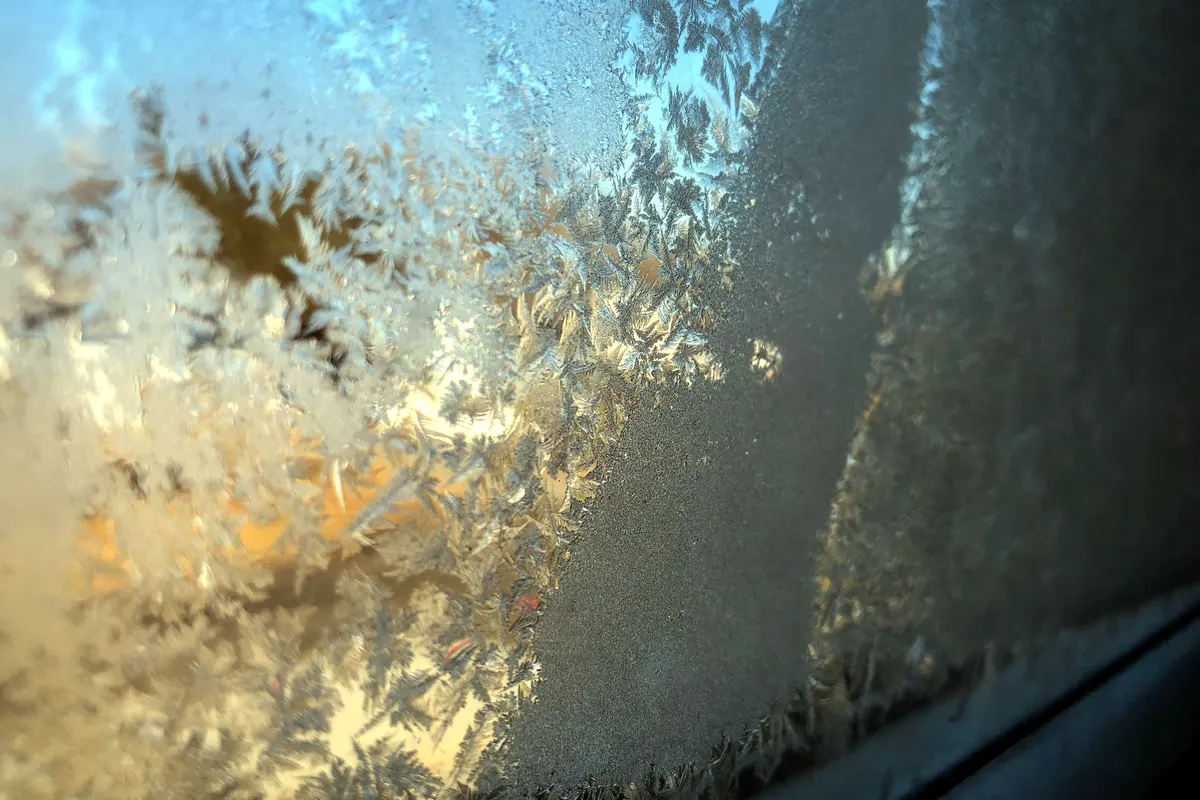
Condensation follows a simple rule. Air at a given temperature and humidity has a dew point, and any surface colder than that collects water. In winter, window glass is the coldest surface in the room (single-pane dramatically, double-pane at its edges and spacers), so it is where indoor moisture announces itself first. Persistent condensation means the indoor dew point sits above the glass temperature for hours daily, and the water it delivers feeds sill mold, rots wood frames, and damages plaster below, quietly and on a schedule.
Two levers exist, and honesty requires naming both: raise the glass temperature (better windows, storm panels, insulating film, keeping drapes open so room air warms the glass) or lower the dew point (remove moisture: ventilation of wet rooms, fewer moisture sources, absorption or dehumidification). Newer, tighter houses tip wet because they trap cooking, shower, and laundry moisture that leakier houses exhaled. The target is not minimum humidity; winter air dried below 30 percent trades sill mold for the cracked-skin syndrome on this family's dry-air page. Use the windows to judge your progress: dry the air until the sweating stops, then keep the humidity there.
The fix, in order
Cheapest first, in order. When a step solves it, you are done; the product step is for the cases the free steps cannot finish.
Free step
Read the pattern
All windows or one room? Morning-only or all day? Between panes (failed seal, different problem) or on the room side (this page)? Five minutes of looking routes the whole response.
Free step
Cut the moisture at its sources
Use the bathroom and kitchen fans and let them run long, keep lids on pots, do not dry laundry indoors on racks in winter, and check any humidifier you are running. About half the condensation cases behind this page come from a humidifier in the next room set too high.
The product step
Absorb in the worst rooms
DampRid tubs placed in the rooms whose windows sweat most, near the cold wall, lower the local humidity steadily and silently. For a single bad bedroom this is frequently the whole solution; the tub's consumption rate reports the room's moisture load.
The product for this step
DampRid moisture absorber (for the worst rooms), with the dehumidifier as the whole-house step
Habit step
Scale up only if the house says so
If every room sweats and tubs dissolve in days, the house needs the refrigerant dehumidifier from the humidity page, set to hold 40 percent, and in a very tight house, a ventilation conversation. Match the machinery to the measurement.
The evidence, in tiers
Tier 1 · The method
Dew point arithmetic and the window-as-first-condenser model are building-science basics; the EPA's humidity band (30 to 50 percent) frames the target.
Tier 2 · This product
DampRid's retailer ratings run 4.6 to 4.8 stars, with 94 to 100 percent of reviewers recommending it across Walmart and Home Depot listings (November 2026).
We have not fogged a test window for this guide. The method is the building-science standard, and the windows themselves provide the reader's feedback instrument.
Tier 3 · What owners report
Owners succeed in proportion to case selection: single-room and moderate cases close with absorbers and source discipline; whole-house wet cases need the machine, and the reviews of each tool grade the other tool's job description.
The alternatives, conceded where they win
| Option | What it is | The honest verdict |
|---|---|---|
| DampRid absorbers plus source discipline | Local passive drying matched to the worst rooms | The pick for the common case: cheap, silent, targeted, and self-reporting via the tub's consumption rate. |
| A 50-pint dehumidifier | Whole-space refrigerant drying | Wins the wet whole house outright (see the humidity page) and loses the single-bedroom case on cost, noise, and a drain where none is needed. |
| Window insulation film kits | Raising the glass temperature with a sealed air layer | Wins on old single-pane glass dramatically and cheaply; it loses on operable windows you actually open, on appearance for some households, and it does nothing for the sill-level humidity elsewhere in the room. A real tool, aimed at the other lever. |
The honest price comparison
The honest comparison is the damage line: sill and frame rot repair runs into hundreds, and a reglazed window more, against $5 to $12 absorbers and fan habits. Drying the air too far has a cost too. Air dried down into the teens causes the dry skin and dry throat problems covered on the dry-air page.
Where it falls short
What follows is drawn from the product's own reviews: the complaints and failures buyers report after living with it.
- Absorbers have a capacity ceiling the tub's dissolution rate will announce; a wet house will outrun them and require the machine, as step four concedes.
- It treats air, not failed seals: between-pane fog is a window defect, and this page's triage is the gate.
- Drapes and furniture against the glass worsen condensation locally regardless of room humidity, by starving the glass of warm room air; arrangement is part of the fix and easily forgotten.
The product, in short
DampRid moisture absorber (for the worst rooms), with the dehumidifier as the whole-house step
Questions people ask next
Why only the bedroom windows?
Bedrooms load moisture all night (two sleepers exhaling) behind a closed door, on the house's coldest wall orientation, often with the door shut against the drier hall air. The pattern is so standard it is nearly diagnostic by itself.
What humidity should I target in winter?
Lower than summer's: 30 to 40 percent is the winter band building guides use in cold climates, because the glass cannot handle more. The feedback rule stands: dry until the sweating stops, not one point further.
Do storm windows or new windows fix it?
They raise glass temperature and can fix it entirely, at window prices. They are the right spend when the windows are due anyway; absorbers and fans are the right spend when the windows are fine and the air is wet.
The sills already have mold. Order of operations?
Clean and treat the mold first (the Home Surfaces grout page and this family's ceiling page explain the difference between a stain and living growth), then dry the air. Treating mold while the air stays wet means it will come back, and drying the air while leaving live mold in place leaves the mold there to spread again.
Building-science guidance on dew point, condensation, and winter humidity bands · Walmart and Home Depot product records for DampRid (November 2026)
The Fix JournalCase 21Home Systems