Ants in the Kitchen That Keep Coming Back
Spraying the ants you see only kills those ants. The ants in your kitchen are only a few percent of the colony. Bait works because the workers carry it back to the nest, to the part you cannot see.
The short answer
Do not spray them: place TERRO T300 bait stations along the trail and let the ants feast and carry the borax home. It holds 4.5 stars from 7,103 ratings at Home Depot (November 2026). Expect more ants on the trail for a day or two before it stops. That extra traffic means the treatment is working.
Why does this happen?
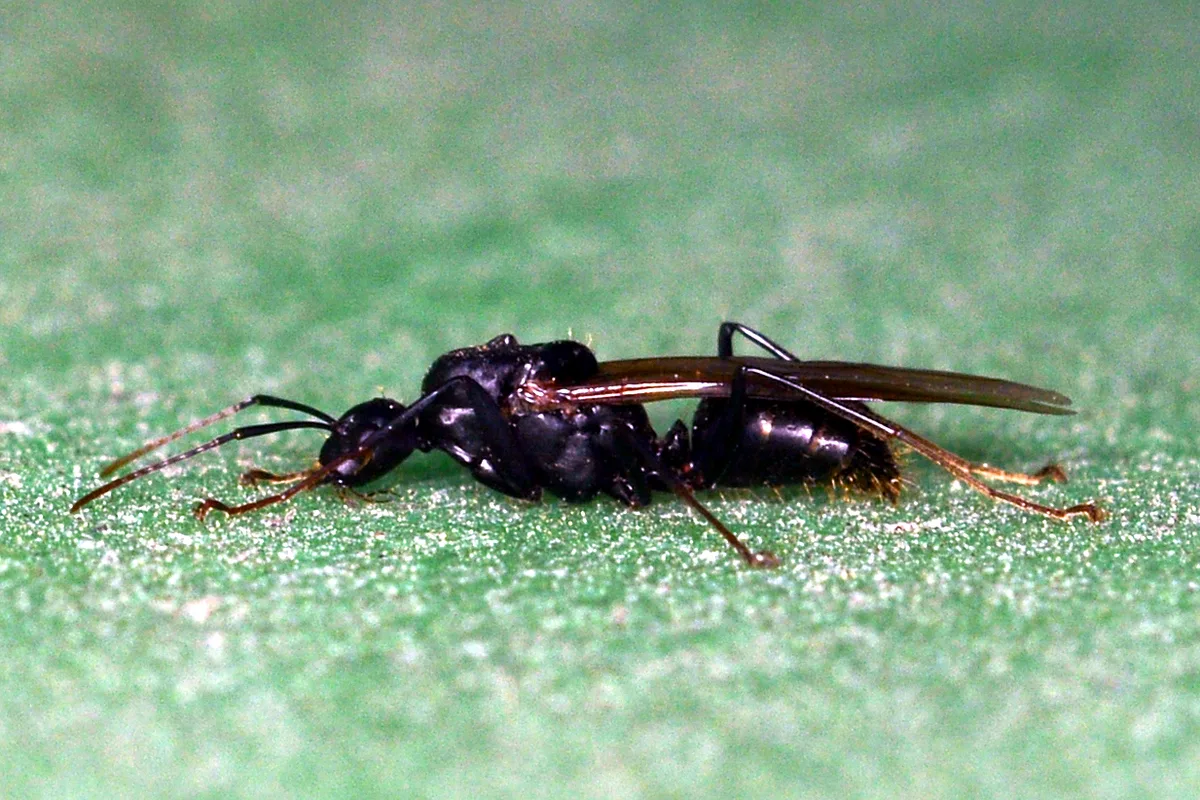
An ant trail is how the colony brings food back to the nest. The workers in your kitchen are a small scouting and foraging fraction of a colony living in a wall void, under a slab, or in the yard, and they are following a pheromone path to food they have reported home. Killing them where they stand removes the messengers and teaches the colony nothing except to send more, often by a new route. Sprays can be worse: some colonies respond to repellent insecticides by budding, splitting into multiple nests.
Bait inverts the relationship: the foragers become the delivery system. A slow-acting stomach poison in a sweet carrier (borax in sugar water is the classic) lets each worker make several trips and share the food by trophallaxis with nestmates, the brood, and the queen. The colony collapses from inside over days, which feels slower than a spray and is actually the only method aimed at the whole organism.
The fix, in order
Cheapest first, in order. When a step solves it, you are done; the product step is for the cases the free steps cannot finish.
Free step
Do not spray the trail; watch it instead
Ten minutes of observation tells you the entry point and the route, which is where bait belongs. Wipe the trail with soapy water only after baiting is underway, not before.
The product step
Place TERRO stations along the route, near the entry
Stations on the trail line, close to where ants enter, out of the food-prep surface itself. Several stations beat one: the colony's traffic should never have to queue.
The product for this step
TERRO T300 Liquid Ant Baits
Habit step
Let them feed; refill rather than relocate
A busy station is a working station. Leave stations in place for the full course (days to two weeks for a large colony) and replace empties. Moving a station mid-treatment restarts the recruitment.
Free step
Close the reason they came
Once traffic ends: grease films under appliances, pet food left down, syrup and honey bottles wiped, and the entry point caulked. Bait kills the colony. Cleaning up food and grease makes the next colony less likely to move in.
The evidence, in tiers
Tier 1 · The method
Baiting with slow-acting toxicants carried to the colony is the integrated pest management standard for household ants, per university extension guidance, as against repellent sprays which extension services explicitly caution against.
Tier 2 · This product
TERRO T300 holds 4.5 stars from 7,103 ratings at Home Depot (November 2026).
We have not baited a test colony for this guide. The method is the standard one university extension services recommend, and this product is the bait most often used for it.
Tier 3 · What owners report
Owners report the pattern this page predicts: an alarming surge at the stations in the first 48 hours, then a taper, then nothing. The recurring failure reports name stations placed away from the trail or removed at the surge, both self-defeating for the same reason.
The alternatives, conceded where they win
| Option | What it is | The honest verdict |
|---|---|---|
| TERRO T300 bait stations | Colony-level borate baiting via the foragers | The pick: the only listed method aimed at the colony rather than at the visible fraction. |
| Contact sprays | Repellent or contact-kill insecticide | Wins on the visible mess for an afternoon and on flying pests; it loses this problem completely, scattering the colony and splitting some species into more nests. |
| Pest control service | Professional baiting and perimeter work | Wins for carpenter ants, multi-colony infestations, and homes where trails return monthly; it loses on price for the standard kitchen trail, which is a $10 problem solved at the source. |
The honest price comparison
The honest comparison is the pest control visit at $75 to $150 for ants, often a quarterly contract at several hundred a year. For the common sugar-ant trail, a $10 pack of stations applies the professional's own method at the shelf price.
Where it falls short
What follows is drawn from the product's own reviews: the complaints and failures buyers report after living with it.
- It looks worse before it looks better; readers who cannot tolerate a busy trail for two days will spray and restart the cycle.
- It only works on species that recruit to sweet bait; grease-feeding species need a protein-based bait, and the trail's menu (sweet versus greasy foods) is the diagnostic.
- Borax stations must sit where children and pets cannot drink from them; placement discipline is part of the method.
The product, in short
TERRO T300 Liquid Ant Baits
Questions people ask next
Why are there MORE ants after I put the bait out?
The first ants that drink the bait go back and bring more ants with them, because they have found a rich food source. That traffic is carrying the treatment home; removing the bait at this moment is the single most common failure.
How long until they are gone?
A small colony can collapse in three to five days; a large one takes two weeks of continuous feeding. If traffic is undiminished after two weeks, the species may not be a sweet feeder, or a second colony is sharing the trail.
Are the stations safe around my dog?
The active ingredient is borax at low concentration, and the stations are enclosed, but the label's instruction governs: place them where pets and children cannot access them, which the trail route usually allows (behind appliances, inside cabinet voids).
They ignore the bait but love the cat food. Now what?
Your colony is protein-feeding this season (colonies switch diets with brood demand). Switch to a protein-based bait format and keep the same placement logic.
University extension integrated pest management guidance on household ant baiting · Home Depot product record for TERRO T300 (November 2026)
The Fix JournalCase 01Home Systems