Mealybugs and Scale on My Houseplants
Mealybugs and scale hide in leaf joints, stems, and the root zone, where wiping and contact sprays keep missing a stage of the infestation. Bonide systemic granules are taken up by the plant and control mealybugs and soft scale from inside, for indoor container plants only.
The short answer
Isolate the plant, wipe off the insects you can see, then work Bonide Systemic Houseplant Insect Control granules into the soil as the label directs and water them in. The product record on retail mirror sites is large, but the figures were not confirmed on a retailer listing we could rely on, so this page rests on the label scope instead. Expect control of mealybugs and soft scale, with armored scale only suppressed.
Why does this happen?
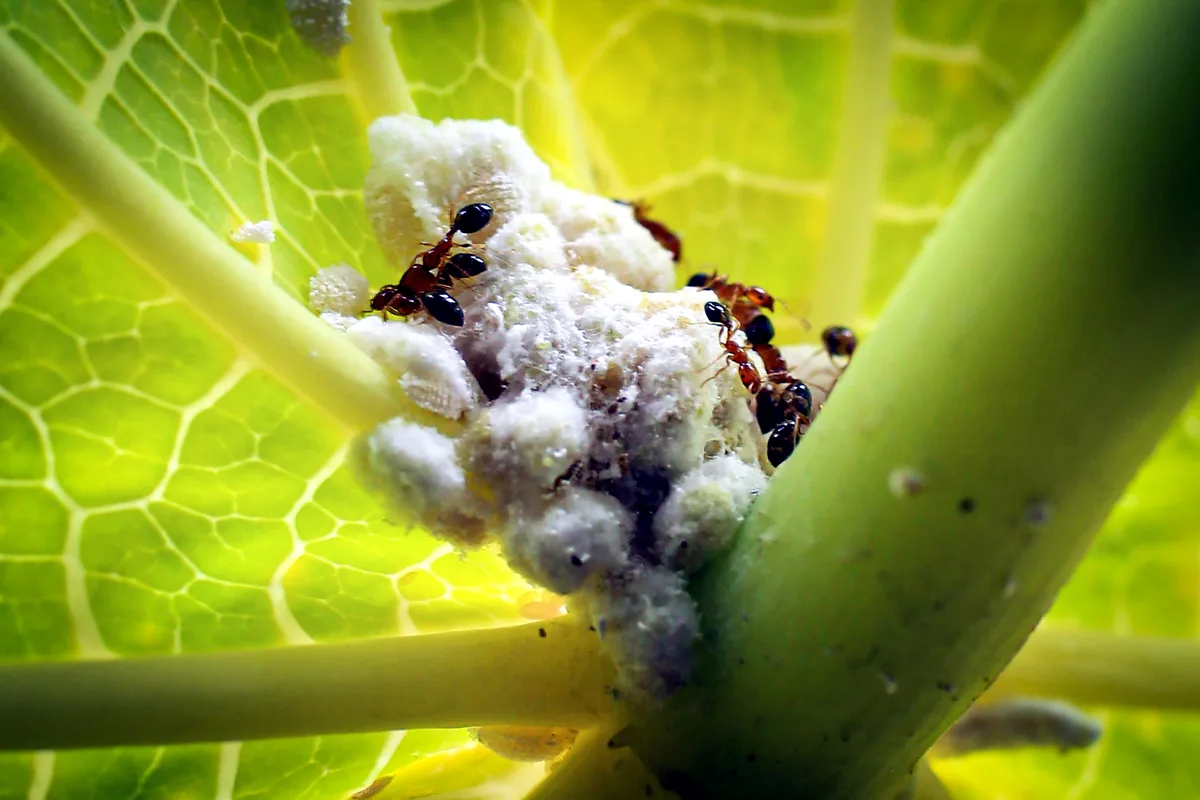
Mealybugs look like small tufts of white cotton in leaf joints and along stems, while scale insects sit as bumps that barely look alive. Both feed on plant sap and excrete sticky honeydew that coats leaves. Contact sprays struggle because mealybugs shelter in crevices and the root zone, and scale sits under a protective covering, so a plant can look cleaned while a protected stage survives to restart the problem.
A systemic granule changes where the treatment lives. The roots take the active ingredient up and it moves through the plant tissue, so insects feeding in joints, on stems, or below the soil surface meet it as they feed. That ability to reach everywhere in the plant is why granules suit a stubborn indoor infestation. The limits are just as clear: the plant takes time to absorb the granules, and the label controls some pests fully while only suppressing others.
The fix, in order
Work down the list: free and cheap steps first. Stop when the plant turns the corner; the product is only for what the free steps cannot do.
Free step
Isolate the plant and inspect the collection
Move the infested plant away from other houseplants and inspect neighbors, especially leaf joints, stem bases, and pot rims. Mealybugs spread from plant to plant in a collection. Treating one plant while an unseen infestation builds on the next one is the common reason the problem seems to jump around a shelf.
Free step
Wipe and pick off what you can see
Use a cotton bud with a little rubbing alcohol on visible mealybugs, and lift scale insects gently with a fingernail or soft brush, checking joints and undersides. This reduces the feeding population today and removes honeydew coated growth. It rarely finishes the job alone, which is exactly why the systemic step follows it.
The product step
Apply Bonide Systemic Houseplant Insect Control granules
Work the granules into the soil surface of the container as the label directs for the pot size, then water them in so uptake can begin. Keep the plant indoors and away from edible plants entirely. Allow time for the plant to take the granules up before judging, because a systemic works through growth and feeding, not on contact.
The product for this step
Bonide Systemic Houseplant Insect Control
Habit step
Monitor weekly and recheck the whole shelf
Inspect the treated plant and its former neighbors weekly, wiping any new mealybugs you find and noting whether fresh honeydew appears. New clean growth with no new insects is the success sign. Keep new plants quarantined for a short period before they join the collection, so the cycle does not restart from a fresh purchase.
The evidence, in tiers
Tier 1 · The method
The label facts carried in the research define the method: mealybugs and soft scale are controlled, armored scale is suppression only, the product is not for spider mites, use is indoor and container only, it is never for edibles, and treated plants moved outdoors carry a pollinator warning.
Tier 2 · This product
The retail mirror record for Bonide Systemic Houseplant Insect Control is one of the largest in this research set, but its star and count figures were not confirmed on a retailer listing we could rely on, so no precise figure is printed here (November 2026).
We have not treated an infested houseplant for this guide. The wipe first, granules second method follows the systemic mechanism and the label scope named in the research.
Tier 3 · What owners report
Owners report the granules ending the cycle of wiping the same plant every week, with the predictable disappointments from owners who used them on spider mites, expected armored scale to be fully controlled, or judged the plant before uptake had time to work.
The alternatives, conceded where they win
| Option | What it is | The honest verdict |
|---|---|---|
| Bonide Systemic Houseplant Insect Control | Systemic granules taken up by container plants | Our pick: the only method here that reaches the root zone and the sheltered stages, turning a weekly wiping chore into a treatment the plant carries itself. |
| Alcohol wiping and contact sprays | Manual removal and surface sprays | Wins for a tiny infestation caught on one plant, and for edible or outdoor plants this product must never touch; it loses on established infestations, where sheltered and root zone stages keep surviving the wipe. |
| Replacing the plant | Discarding the infested plant and starting again | Wins when a cheap plant is heavily infested and threatening a valuable collection, because removal ends the risk immediately; it loses for a favourite plant with a moderate infestation that a systemic can clear in place. |
The honest price comparison
The honest comparison is losing a houseplant collection plant by plant, or spending every week wiping the same insects off the same stems. One container of granules treating the affected pots is the small cost against a shelf of replacements.
Where it falls short
These weaknesses come from the product's own reviews, not from a rival's marketing. Read them before you buy.
- It is slow by mechanism: roots must take it up and insects must feed before control shows.
- Armored scale is suppression only on the label, so expectations for that pest must stay limited.
- It must never be used on edible plants and is for indoor container use only.
- It does nothing for spider mites, and using it for them wastes the treatment window for that different problem.
The product, in short
Bonide Systemic Houseplant Insect Control
Questions people ask next
Why do mealybugs keep coming back after I wipe them off?
Wiping removes the insects you can see, but mealybugs shelter in leaf joints, crevices, and the root zone, and eggs and young stages are easy to miss. A systemic granule reaches those feeding sites through the plant itself, which is why it follows the wipe.
Is it safe to use on my herb pots indoors?
No. The label scope in the research is clear: never on edible plants. Keep granules for ornamental houseplants in containers indoors only, and use manual removal or a different labeled option for herbs and any plant you eat.
Will it work on the bumps that will not wipe off?
Those bumps are likely scale. Soft scale is controlled on the label; armored scale is suppression only, meaning numbers are reduced rather than fully controlled. Set expectations by identifying which type you have before judging the result after treatment.
Can I move the treated plant outside for summer?
The label carries a pollinator warning for treated plants moved outdoors, because the systemic remains in the plant. Keep treated houseplants indoors as directed, and do not place them where pollinators will feed on them after treatment.
Product label for Bonide Systemic Houseplant Insect Control granules · Walmart listing for Bonide Systemic Houseplant Insect Control (November 2026)
The Fix JournalCase 24Plants & Garden