Dog's Breath Stinks and Tartar Is Building Up
Bad breath in dogs comes from bacteria in plaque and tartar. Tartar is hard, like rock, and no chew dissolves it. Dental chews slow down new buildup after a cleaning and help dogs whose mouths are only just starting to build up tartar. The vet comes first here too.
The short answer
Bad breath tells you something about the mouth; it is not just how the dog is. Have a vet look at any mouth with heavy tartar or red gums. Then keep teeth clean with GREENIES dental chews. They hold 4.8 stars from 14,999 ratings on Chewy for the Regular 36-count, with 92 percent of reviewers rating them positively on effectiveness (November 2026), and they carry the Veterinary Oral Health Council's acceptance for plaque and tartar control. Chews keep teeth clean. They do not dig out tartar that is already there.
Why does this happen?
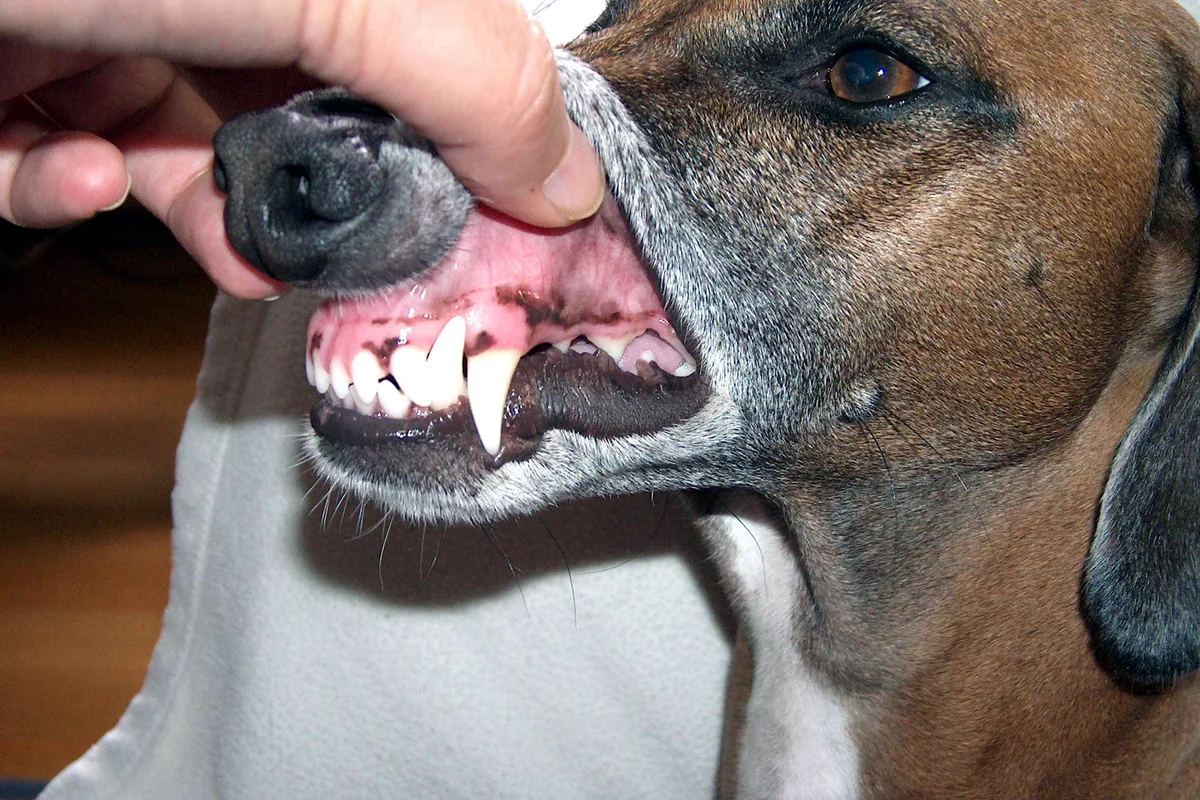
Plaque forms on teeth within hours of cleaning: a bacterial film that mineralizes into tartar (calculus) over days, cementing itself below the gumline where it drives gingivitis and periodontal disease, the most common clinical condition in adult dogs. The bad smell is the sulfur gases given off by those bacteria. Below the gumline, the disease quietly destroys the ligament and bone that hold the tooth, because dogs do not show tooth pain the way they show a sore paw. By age three, most dogs have some gum disease of this kind. What varies is how fast it gets worse.
Scrubbing the teeth is what controls plaque. Brushing is the best method because it breaks up plaque every day before it hardens. VOHC-accepted chews are the easier second choice, because owners are more likely to keep up with them. Their texture scrubs the tooth surfaces while the dog chews for a while. Neither brushing nor chews removes tartar that has already hardened, because tartar is mineral. It comes off with instruments, at the vet, under anesthesia. That is why the order on this page, vet check first, cleaning if the vet advises it, then daily care to keep teeth clean, matches human dentistry. Breath that smells sweet or like ammonia, rather than just bad, can be a sign of another illness, such as diabetes or kidney disease. That needs a vet promptly in its own right.
The fix, in order
The steps run in order, cheapest first. Stop at the step that works. The product comes last, and only where the free steps run out.
Free step
The vet's mouth check
At the next visit, or sooner if any of the warning signs in the box above apply, ask the vet to grade the tartar and gum health. Have a cleaning under anesthesia if the grade calls for it. Scraping without anesthesia only cleans the visible crowns. The disease keeps going under the gum, so we do not count it as care.
The product step
Daily GREENIES at the dog's size
One GREENIES chew daily, sized to the dog's weight class, fed under supervision. The VOHC acceptance is for plaque and tartar control when chews are fed at this rate. A chew now and then is a treat, not dental care, and we price it here as daily care.
The product for this step
GREENIES Dental Treats
Free step
Add brushing where the dog allows
Even two or three brushings a week with dog toothpaste (never human toothpaste; xylitol and fluoride are dog hazards) outperforms chews alone, because the brush reaches the gumline the chew cannot. Get the dog used to it gradually. On days when brushing does not happen, let the chew do the work.
Habit step
Recheck the breath monthly
Use the breath as your home check. If it is improving or staying the same, the routine is working. If it gets worse even though you are keeping up the routine, that is the cue to see the vet, because a mouth that is being looked after should not get worse. Something else, such as a problem with a tooth root or a wider health problem, may be the cause.
The evidence, in tiers
Tier 1 · The method
The VOHC (Veterinary Oral Health Council) awards its Accepted Seal after trials that show a product reduces plaque or tartar. GREENIES carries it. That puts the product in the small group of chews backed by controlled trials rather than owner testimonials.
Tier 2 · This product
GREENIES hold 4.8 stars from 14,999 ratings on Chewy (Regular 36-count), with 92 percent of reviewers rating them positively on the Effectiveness attribute (November 2026).
We have not run a dental program for this guide. The VOHC acceptance is the evidence this recommendation rests on, and it counts for more than any single story we could add.
Tier 3 · What owners report
Owners report that breath improves within weeks of daily use, and that dogs treat the chew as the highlight of the day. That enthusiasm is what keeps a dental routine going. Failures center on chews that are too small and are gulped by large dogs. That is a sizing and supervision issue, as the steps above say.
The alternatives, conceded where they win
| Option | What it is | The honest verdict |
|---|---|---|
| GREENIES daily chews (VOHC-accepted) | Abrasive chewing with controlled-trial evidence | Our pick for keeping teeth clean day to day. It is the only kind of chew here with a VOHC seal behind it, and owners keep up with it at a rate brushing rarely reaches on its own. |
| Toothbrushing alone | Daily mechanical plaque disruption at the gumline | It works best of all, and vets rate it highest. It loses on home reality, because most dogs and owners do not keep it up perfectly. That is why the winning choice is chews with brushing added where possible. |
| Water additives and dental wipes | Passive or light-contact adjuncts | Wins on effort (near zero); the evidence for additives is thinner than the VOHC class, and wipes reach fronts of teeth only. Useful supplements, not the backbone. |
The honest price comparison
The honest comparison is the dental cleaning itself at $300 to $800 under anesthesia, repeated on the disease's schedule when maintenance is absent. A daily chew program at roughly a dollar a day makes the time between cleanings longer and protects the teeth between them. The vet still decides the plan.
Where it falls short
The weaknesses below are taken from the product's own review record. They are printed here because the recommendation is.
- Chews add calories. A Regular GREENIES is the size of a snack. Cut the dog's food a little to make room, or the dental routine will undo your efforts to control the dog's weight.
- They do not remove tartar that is already there. A mouth already carrying tartar needs the vet's instruments first. Feeding chews at hard tartar and expecting it to dissolve is what produces the disappointed reviews.
- Gulpers must be supervised and sized correctly; a chew swallowed in chunks is a GI risk, not a dental treatment.
The product, in short
GREENIES Dental Treats
Questions people ask next
How bad is it if my dog's breath has always been like this?
It is common, it is not normal, and it is treatable at the level of its cause. 'Always' usually means periodontal disease established early and progressing; the vet's grade tells you what maintenance can hold and what cleaning must reset.
Do the chews really need to be daily?
The VOHC trials behind the seal used daily feeding, and plaque hardens on a daily cycle. Feeding every other day is better than nothing, but it is less than the trials tested. Price the routine as a daily one, or choose the lower cost of brushing, but be clear with yourself about which you are doing.
Puppy breath is sweet and lovely. Adult breath turned. Coincidence?
Puppy mouths are new. The change follows plaque building up with age, and small breeds change faster, because crowded teeth in small jaws collect more plaque. Time is the cause. That is why daily care starts young, not after the smell starts.
What about bones and antlers for teeth?
They fracture teeth, regularly enough that veterinary dentists have a named injury for it (slab fractures of the carnassial tooth). Any chew harder than the tooth trades tartar for a root canal or extraction. The VOHC list exists to make this choice for you.
Veterinary Oral Health Council accepted products list and periodontal disease guidance · Chewy product record for GREENIES (November 2026)
The Fix JournalCase 09Pets