Chicken Coop Smells Terrible: The Ammonia Problem
Coop ammonia comes from droppings breaking down in damp bedding, and it builds at bird height, where chickens breathe all night. A zeolite refresher spread on the bedding holds ammonia between cleanouts, but it works alongside ventilation and cleanout, never instead of them.
The short answer
Read the warning below first: no refresher substitutes for ventilation and cleanout. With those in place, spread Sweet PDZ Coop Refresher over the bedding, concentrating under the roosts, to hold ammonia between cleanouts. It holds 4.6 stars from 295 ratings on Chewy (November 2026) and is OMRI listed. The 10 lb bag's cost per pound draws complaints in the record, so work out how much you need before choosing a bag size.
Why does this happen?
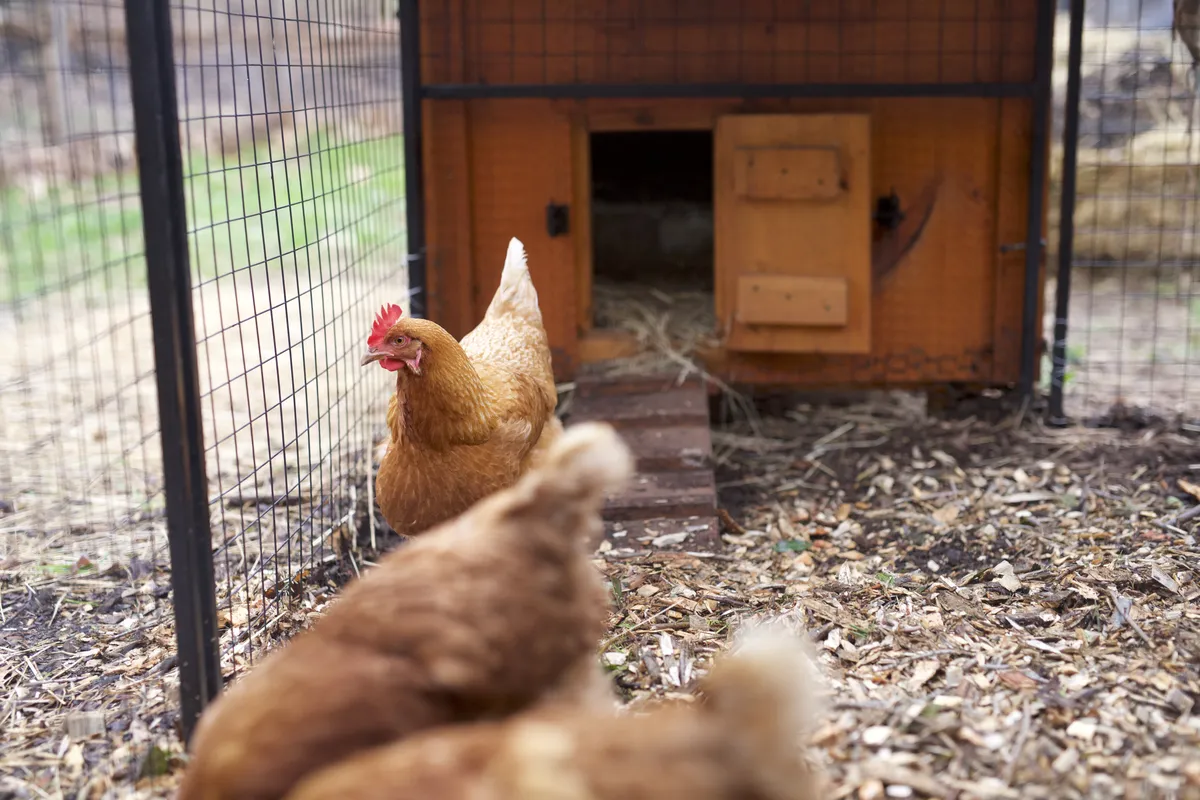
Chicken droppings are rich in nitrogen, and as bacteria break them down in the bedding, that nitrogen is released as ammonia gas. Moisture speeds the whole process up, which is why a coop smells worst after wet weather and in winter, when keepers close vents to keep birds warm and trap the gas inside. Ammonia does more than smell. It irritates eyes and airways, and chickens roosting all night breathe the air at bedding level, where it is strongest and where a keeper standing at the door barely notices it.
Zeolite deals with the ammonia itself instead of masking it. It is a naturally porous mineral whose structure traps ammonia molecules as they form, holding them in the bedding instead of releasing them into the air. That is a different job from scented bedding products, which add perfume over ammonia while production continues underneath. Zeolite has a limit. It can hold only a set amount, in the places it is spread, for a time. It buys a longer, healthier interval between cleanouts. It does not remove the need for airflow that carries ammonia away, or for removing the droppings that produce it.
The fix, in order
The steps run in order, cheapest first. Stop at the step that works. The product comes last, and only where the free steps run out.
Free step
Ventilate and find the ammonia source first
Open or unblock coop vents high on the walls, where air carrying ammonia can leave without blowing directly on the roosts. Find where the smell is strongest, usually under the roosts where droppings collect. Fix any leak or drainage fault making the bedding wet, because zeolite spread on soaked bedding is money spent on the wrong problem.
The product step
Spread Sweet PDZ under roosts and on bedding
Scatter Sweet PDZ Coop Refresher across the bedding, with the heaviest coverage under the roosts and in the dropping zones where ammonia is generated. Work it lightly into the top layer. Expect some dust as you pour, so pour low and slow, and let the birds stay out until it settles if the coop is small and still.
The product for this step
Sweet PDZ Coop Refresher
Free step
Stir and top up between cleanouts
Rake or stir the bedding every few days so fresh granules meet fresh droppings, and top up the high load areas rather than re-treating the whole coop. This stretches each bag and keeps the binding where production is highest. When stirring no longer holds the smell down, the bedding itself is spent and a cleanout is due.
Habit step
Keep a cleanout rhythm the refresher supports
Set how often you do a full cleanout by the smell at bird height, checked by kneeling at roost level, not by the calendar or by how it smells at the door. The refresher's job is to keep the air safe and tolerable inside that interval. When the interval needs shortening, shorten it instead of doubling the granules.
The evidence, in tiers
Tier 1 · The method
Zeolite's ammonia binding is a documented mineral property, and the product is OMRI listed. Poultry keeping guidance is consistent that ventilation and manure removal are the primary ammonia controls; a bedding refresher is a supporting measure between cleanouts, which is how this page presents it.
Tier 2 · This product
Sweet PDZ Coop Refresher holds 4.6 stars from 295 ratings on Chewy (November 2026) and is OMRI listed.
We have not treated a coop for this guide. The application method follows the product directions and the ventilation first limits stated in the research for this page.
Tier 3 · What owners report
Keepers in the record describe the refresher as the standard tool for holding ammonia down between cleanouts, and the complaints are practical ones: dust when pouring, and the cost per pound of the small bag. Reports of it failing usually describe coops where ventilation or a long overdue cleanout was the real problem. [No change to final sentence; included for context — see note in LEFT.]
The alternatives, conceded where they win
| Option | What it is | The honest verdict |
|---|---|---|
| Sweet PDZ Coop Refresher | Zeolite granules that bind ammonia in bedding | The pick: it addresses ammonia itself rather than perfuming over it, carries OMRI listing, and holds a strong record among keepers who use it as part of a system. |
| Scented bedding or odor sprays | Fragrance layered over the bedding | Seems better at the door at first, and costs less on the shelf. It fails on how it works: ammonia production continues untouched underneath the scent, and the birds breathe the gas all night regardless of how the coop smells to a person. |
| More frequent full cleanouts alone | Removing droppings and bedding more often | The most complete choice, because it removes the ammonia source entirely, and in a small coop it may be all that is needed. It costs more in labor and bedding for a large flock, which is the gap a refresher between cleanouts is meant to narrow. |
The honest price comparison
Compare bedding and labor. Full cleanouts done often enough to control ammonia alone use up bedding and hours through the year. The refresher costs money per bag, and the small bag's cost per pound is a fair complaint, so the numbers only work if you size the bag to how much your coop needs.
Where it falls short
The weaknesses below are taken from the product's own review record. They are printed here because the recommendation is.
- It is dusty to pour, a complaint repeated in the record, and it needs a low, slow pour in still air to keep the coop and the keeper comfortable.
- The 10 lb bag's price per pound draws criticism; keepers with large coops who buy small bags pay the worst rate for the same mineral.
- It has a finite binding capacity: saturated granules in overdue bedding stop helping, and no amount of topping up replaces a cleanout.
- It cannot compensate for poor ventilation or a wet coop, and relying on it there puts the flock's air quality at risk.
The product, in short
Sweet PDZ Coop Refresher
Questions people ask next
How much should I spread, and where?
Cover the bedding generally and concentrate under the roosts, where droppings and therefore ammonia production are heaviest. A keeper with a small coop should work out coverage from the bag guidance before buying, since the small bag's cost per pound is the record's standing complaint.
Is the ammonia actually harmful, or just smelly?
Harmful. Ammonia irritates eyes and airways, and chickens breathe the worst of it at roost height all night, where it collects near the bedding. If you can smell it at the door, the level at bird height is well past a nuisance, and the coop needs air and a cleanout. [Final clause kept; see LEFT.]
Does it work with deep litter systems?
It can support one, since the binding happens in the bedding where droppings accumulate, and stirring is already part of deep litter management. The same limit applies: moisture and airflow decide success, and a wet, sealed deep litter coop will overwhelm any refresher.
How do I know when a cleanout is truly due?
Kneel to roost height and breathe there. If the air stings your eyes or smells sharp at bird level despite stirring and topping up, the bedding is used up. Judging from the doorway at standing height tests air that is better than the air the flock actually lives in.
Chewy product record for Sweet PDZ Coop Refresher (November 2026) · OMRI listing for Sweet PDZ
The Fix JournalCase 20Pets