Mold on the Bathroom Ceiling: Kill It, Keep It From Returning
Mold on the bathroom ceiling means the room's moist air is not leaving fast enough. The ceiling is where the proof shows up. Clean and treat the growth with a product that kills and prevents, fix the airflow, and repaint with the lesson learned. Two honest limits: treatment does not remove existing black staining, and a fan that only makes noise is not ventilation.
The short answer
Treat, ventilate, then repaint: spray Concrobium Mold Control on the ceiling growth to kill it and leave a preventive film. It holds 4.0 stars from 2,489 ratings at Walmart (November 2026). Know its honest limit before you buy: It kills and prevents mold, but it does not remove the black stain the growth leaves. Removing the stain takes paint, and this page will not pretend otherwise.
Why does this happen?
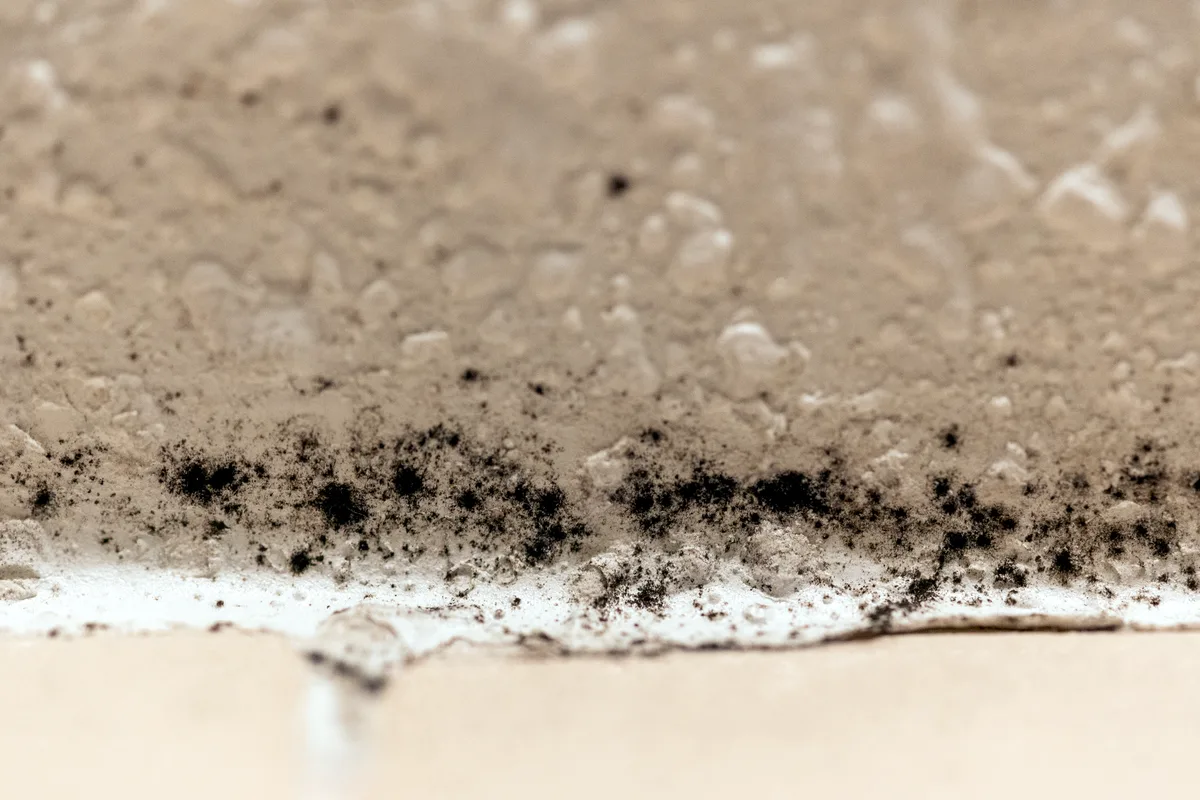
A bathroom ceiling is a moisture trap by geometry: shower steam rises, the ceiling is often the coolest surface (especially under an unheated attic), and condensation forms there first and dries last. Mold colonizes the paint film and the dust on it, spreading in the corner patterns that map the room's dead air exactly. So the mold is a measurement of fan capacity, fan habits, or both. A fan that is too small, clogged with lint, vented into the attic instead of outdoors, or switched off the second the shower ends leaves the ceiling wet for hours every day, and mold is what hours of daily wetness grows.
Treatment has two chemistries worth distinguishing. Bleach whitens the stain and kills surface growth on non-porous surfaces but does little in paint film and adds its own moisture. Concrobium's registered approach crushes and kills the organism as it dries and leaves an antimicrobial film that resists recolonization on the treated surface, which is prevention built into the treatment. Neither removes pigment already driven into porous material: the grout page's distinction between growth and stain runs this whole topic.
The fix, in order
Cheapest first, in order. When a step solves it, you are done; the product step is for the cases the free steps cannot finish.
Free step
Fix the air before the surface
Run the fan during every shower and for 30 minutes after (a timer switch makes this automatic), and verify it actually vents outdoors: tissue held to the grille should pull firmly, and the exterior vent should show steam on a cold morning. A fan venting into the attic is manufacturing attic mold, and discovering that is the highest-value step on this page.
The product step
Clean, then treat with Concrobium
Wipe loose growth and dust from the dry ceiling first (the film needs contact), then spray Concrobium Mold Control to coat the affected area per its label and let it dry fully. No rinsing: the dried film is the preventive.
The product for this step
Concrobium Mold Control
Free step
Repaint the stain away, with the right paint
Once the growth is dead and the surface is dry, prime any remaining stain with a stain-blocking primer and finish with a bathroom paint rated for humid rooms. This step is only cosmetic: it covers the stain, and it does not change what caused the mold.
Habit step
Hold the line with habits and a spring check
Fan discipline is the permanent fix; add a spring look at the ceiling corners and the fan grille (clean its lint) to the house calendar. Recurrence in the same corner after all this is the leak signal from the triage, escalated.
The evidence, in tiers
Tier 1 · The method
Concrobium is EPA-registered for mold killing and prevention on treated surfaces, and the ventilation-first ordering follows EPA and building-science mold guidance, which treats moisture control as the actual remedy and chemicals as the cleanup.
Tier 2 · This product
Concrobium Mold Control holds 4.0 stars from 2,489 ratings at Walmart (November 2026), a mid-pack record quoted plainly: the complaints in it concentrate on the stain it does not remove, which this page discloses in the verdict rather than letting readers discover it.
We have not treated a test ceiling for this guide. The sequence rests on EPA mold guidance and the product's registration.
Tier 3 · What owners report
Owners who ventilate report the treatment holding for seasons; owners who skip the fan step report the ceiling re-colonizing in the same corners on a monthly rhythm. Owners' reports test the same question: does moisture or chemistry govern? Moisture wins.
The alternatives, conceded where they win
| Option | What it is | The honest verdict |
|---|---|---|
| Concrobium treatment plus ventilation fix | Kill, preventive film, and the moisture cause removed | The pick: it is the only row that treats the ceiling and the reason there is a ceiling problem. |
| Bleach wash | Surface whitening and disinfection | Wins on a small patch of growth on hard, non-porous tile; it loses on painted ceilings (film penetration, moisture added, stain partly remaining) and it prevents nothing, so the calendar refills the corner. |
| Mold-resistant paint alone | A resistant finish coat over the problem | It wins as the final step of this page's ladder. Used alone over live growth, it seals a colony under fresh paint, and paint does not stop a colony: every repaint that blistered proves it. |
The honest price comparison
The honest comparison is a remediation quote for bathroom mold at $500 and up, or a bathroom fan replacement (the other common cure) at $100 to $250 installed. The bottle is $13 to $15, the fan check is free, and the order in which you do them is this page's value.
Where it falls short
What follows is drawn from the product's own reviews: the complaints and failures buyers report after living with it.
- It does not remove staining. Readers who buy it as a stain remover will join its three-star reviews, armed with a warning they were given here in the verdict.
- Its 4.0-star record is genuinely mid-pack: on heavy growth, professionals use stronger chemistry, and this page's triage sends heavy cases there.
- The preventive film lasts on the treated surface; it does nothing for the next room or the attic the fan may be venting into.
The product, in short
Concrobium Mold Control
Questions people ask next
Is bathroom ceiling mold dangerous?
Common bathroom molds are primarily allergens and irritants, and a moisture report. Large areas, immune-compromised occupants, or growth after flooding change the category to professional remediation, as the triage states.
My fan is new and the mold came anyway. Why?
Capacity or ducting: a fan rated for a smaller room, a long crushed duct run, or a vent blocked at the exterior cap all leave a 'working' fan moving little air. The tissue test plus a look at the duct route answers it in ten minutes.
Can I just paint over it with mold paint?
Over dead, treated, dry growth, with stain-blocker first: that is exactly step three. Over live growth: no paint system sanctions that, whatever the can's front implies, and the blistering will testify within a season.
What about the grout and caulk in the same shower?
Same moisture, different material, and its own page in Home Surfaces: grout staining survives killing and needs a stain remover, which is the distinction this site keeps returning to because bathrooms keep teaching it.
EPA mold guidance: moisture control as the remedy · Walmart product record for Concrobium Mold Control (November 2026); EPA registration
The Fix JournalCase 14Home Systems