Bathroom Sink Smells Like Rotten Eggs
That smell at one sink usually comes from hydrogen sulfide gas made by bacteria in the slime inside the drain, not from your water supply. The fix is to clean the drain walls and the overflow channel, the two places where the smell is made.
The short answer
One sink smelling is a drain problem, not a water problem: scrub the drain and its overflow channel, then coat the walls with Green Gobbler enzyme gel overnight. Its record is 3.7 stars with 73 percent recommending it across retailer ratings (November 2026). The gel finishes what scrubbing starts. Used on its own, without scrubbing first, it does not work well, which is what its reviews show.
Why does this happen?
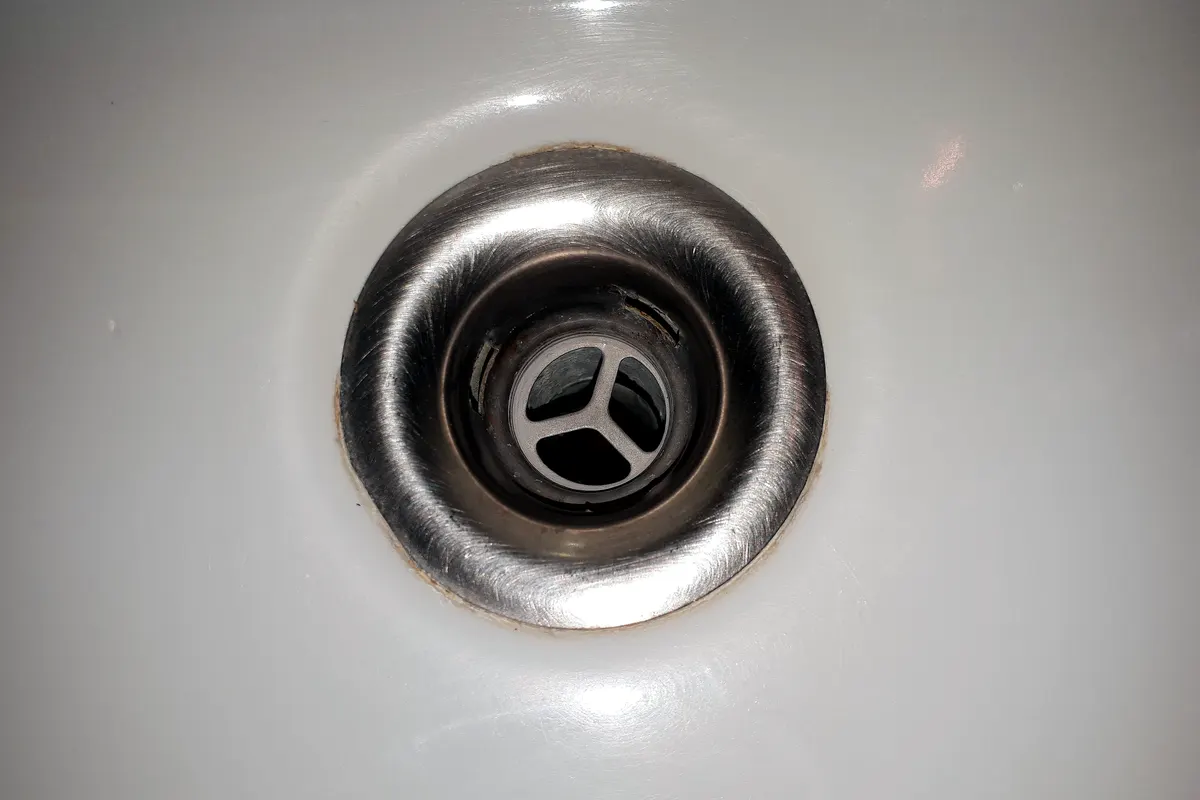
Hydrogen sulfide, the rotten-egg gas, is produced by bacteria digesting organic matter without oxygen. A bathroom drain offers them everything: a biofilm of soap, toothpaste, skin cells, and hair fragments coating the pipe walls and the sink's overflow channel, wet, warm, and undisturbed. The smell is strongest when water runs, because the flow pushes the drain's air up at you, and after the room has been closed overnight, which is why it hits you first thing in the morning.
The diagnosis that matters is scope. One sink: the drain's film, local and fixable here. Every tap, hot water only: the water heater's anode rod is feeding sulfide bacteria, a different fix (the rod, or its powered replacement). Every tap, hot and cold: the supply or well itself, which is a water-testing conversation. This page governs case one and tells you how to know you are in it: fill a glass, step away from the sink, and smell the glass. If the glass smells clean, the drain is the problem.
The fix, in order
Cheapest first, in order. When a step solves it, you are done; the product step is for the cases the free steps cannot finish.
Free step
The glass test, and the guest-bath rule
Smell a filled glass away from the sink to convict the drain. If the bathroom is rarely used, run the tap for a minute first: a dried-out trap lets sewer gas up directly, and refilling it is the whole cure more often than the internet admits.
Free step
Scrub the drain walls and the overflow
A bottle brush around the drain's circumference and up into the overflow slot (the channel behind the sink's front wall, reachable with a flexible brush and patience), plus the stopper, which wears its own film coat. This mechanical pass is the treatment; everything after is maintenance of it.
The product step
Gel the walls overnight
Green Gobbler gel applied around the drain rim and into the overflow opening in the evening, left overnight to digest the film the brush loosened and the corners it missed. Repeat across several nights for an established smell.
The product for this step
Green Gobbler drain treatment (enzyme gel class)
Habit step
Keep film from re-forming
A weekly minute of very hot water down the drain and a monthly brush pass. Biofilm regrows on a schedule set by use; the rhythm, not the chemistry, is the permanent part.
The evidence, in tiers
Tier 1 · The method
Sulfide generation by drain biofilm and the anode-rod variant are documented in water-quality guidance from health and extension authorities; the glass test is the field diagnostic those sources teach.
Tier 2 · This product
Green Gobbler's record is 3.7 stars with 73 percent recommending it, per retailer ratings (November 2026), the same honest figure quoted on this family's drain-fly page, where the product's role as a finisher behind mechanical cleaning is explained in full.
We have not gelled a test drain for this guide. The diagnosis above is checkable by the reader in one minute with a glass of water, which is how health guidance intends it.
Tier 3 · What owners report
Owner reports sort exactly as the diagnosis predicts: one-sink cases resolve with scrub plus gel and stay resolved on the hot-water rhythm; whole-house cases review the gel poorly because their problem was an anode rod wearing a drain costume.
The alternatives, conceded where they win
| Option | What it is | The honest verdict |
|---|---|---|
| Scrub plus Green Gobbler gel | Mechanical film removal, then enzymatic finishing | The pick for the one-sink case, in this order, for the reasons this whole family keeps demonstrating: chemistry finishes what friction starts. |
| Bleach down the drain | Center-channel disinfectant pour | Wins a day of reduced smell and loses the month: it runs past the film, adds chlorine to a biofilm that regrows from its base, and never enters the overflow channel where half the smell lives. |
| A plumber's visit | Diagnosis and mechanical cleaning with professional tools | Wins the trap, vent, and anode cases at $150 and up, and this page's triage routes them there gratefully; it loses on price for a film problem you can brush in ten minutes. |
The honest price comparison
The honest comparison is the plumber's diagnostic visit at $150 and up against a brush you own and a $13 to $17 bottle. The glass test ensures you only spend the small money on the problem that money actually solves.
Where it falls short
What follows is drawn from the product's own reviews: the complaints and failures buyers report after living with it.
- The 3.7-star record is real, and its most common cause (wrong diagnosis) is now the reader's to avoid, which this page front-loads.
- It cannot touch the anode-rod or supply-side cases; if the glass test convicts the water, this bottle is not your answer and we say so before you buy it.
- Overflow channels vary: some sinks' overflows are nearly unreachable, and those keep a reservoir the brush cannot fully clear.
The product, in short
Green Gobbler drain treatment (enzyme gel class)
Questions people ask next
Why is it worst in the morning?
The drain's air sits undisturbed all night, concentrating the gas at the drain mouth, and your first water use pushes it up. A smell that greets you at 7 a.m. and fades by 8 is the drain's signature, not the supply's.
Hot water only smells. Still this page?
No: hot-only sulfide is the water heater's anode rod reacting with the water, a known and fixable interaction (rod replacement, often with a powered anode). Different appliance, different fix, and no drain product will help.
Is the gas dangerous at these levels?
At the levels you get from a drain smell, the gas is a nuisance, well below hazardous levels. Your nose can detect it at very low levels, which is why it seems worse than it is. A whole-house strong smell is a different assessment and a call worth making.
Can I use the same gel in the shower drain?
Yes, with the same scrub-first logic; showers add hair to the film, so the shower pages in this family (the catcher and the unclog guides) are the companions that keep the shower version from returning.
Water-quality guidance on sulfide odor sources and the glass test · Retailer product records for Green Gobbler (November 2026)
The Fix JournalCase 19Home Systems