Shower Curtain Liner Covered in Black Mildew
Mildew grows at the folded bottom of a shower liner, where water sits in the creases after every shower and dries slowly. A heavy, non-porous PEVA liner dries faster, wipes clean, and hangs straight, and pulling it flat after each shower keeps the bottom from staying wet.
The short answer
Replace the mildewed liner with a LiBa PEVA 8G liner, and pull it closed and flat after each shower so the bottom dries. The liner holds 4.3 stars from 215,624 ratings on Amazon.ca (November 2026). No liner is mold proof, and this page does not claim one is. What you get is a surface that dries fast and wipes clean, replaced every 6 to 12 months instead of scrubbed forever.
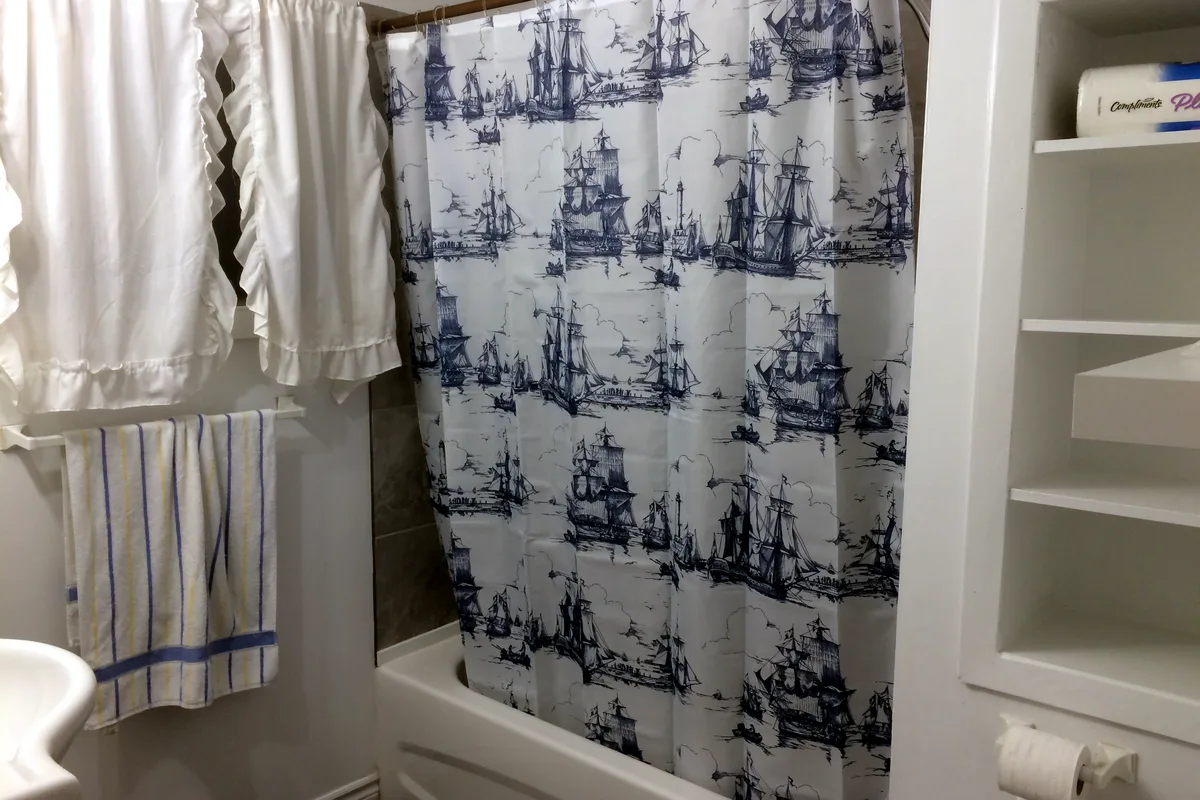
Why does this happen?
The bottom of a shower liner has the worst conditions in the bathroom. It hangs in folds against the tub, gets splashed at every shower, and its creases hold water against the surface long after the room feels dry. Mildew needs only moisture, a surface, and time, and a thin porous liner gives it all three, plus tiny texture to grow into. The black growth gathers where the liner stays wettest and folds tightest. That pattern shows why it grows, not how often the room is cleaned.
The material changes how long the liner stays wet each day. A heavy, non-porous PEVA surface holds no water inside it, sheds droplets instead of soaking them up, and wipes clean because growth sits on it rather than in it. Weight at the bottom adds a second benefit: the liner hangs straight against the tub instead of billowing into the shower and clinging, so it dries as one flat sheet. None of that makes any liner immune. It shortens the time the liner stays wet each day until mildew cannot keep growing.
The fix, in order
The steps are ordered cheapest first. Stop at the one that solves it and skip the rest; the product is there only for where the free steps run out.
Free step
Judge the old liner honestly and take it down
Spread the liner flat and look at the bottom in good light. Surface spots on an otherwise sound liner may wash off. Growth deep in the folds, a musty smell that survives washing, or a stiff and cracking bottom means mildew has got into the material itself. In that case, replacing the liner is the right step.
The product step
Wash the tub edge and hang the new liner straight
Clean the tub rim and the wall area the liner touches, so the new liner does not hang against the old mildew. Fit the LiBa PEVA 8G liner on sound hooks, check that its weighted bottom meets the tub, and spread it to its full width so it hangs flat rather than bunched from the first day.
The product for this step
LiBa PEVA 8G liner
Habit step
Pull it closed and flat after every shower
After showering, draw the liner closed across the tub and smooth it so no folds trap water at the bottom, and let the bathroom fan or an open door dry the room. A liner left bunched and wet in the corner will grow mildew on the same schedule as the one it replaced.
Habit step
Wipe the base monthly and replace on a cycle
Once a month, wipe the bottom section of the liner while it hangs, catching early spots while they are still on the surface. Plan to replace it every 6 to 12 months, sooner if the bottom turns grey again in its folds. Each time, judge by the liner's condition, not just by how hard you have scrubbed it.
The evidence, in tiers
Tier 1 · The method
This approach follows how mildew grows on liners: it starts where water lingers in folds on a porous surface, so a non-porous material that dries fast and wipes clean, hung flat to dry, reduces the hours of wetness mildew needs.
Tier 2 · This product
The LiBa PEVA 8G liner holds 4.3 stars from 215,624 ratings on Amazon.ca (November 2026), and that listing reports more than 500 bought in the past week.
We have not run a liner through a year of showers for this guide. The material advice and the hang-it-flat method follow how mildew grows and the maker's directions for this liner.
Tier 3 · What owners report
Owners report the base staying clean far longer than on the thin liners it replaced, and the weighted bottom ending the familiar problem of the liner billowing in and clinging during a shower. Reports of returning growth tend to come with the liner habitually left bunched and wet.
The alternatives, conceded where they win
| Option | What it is | The honest verdict |
|---|---|---|
| LiBa PEVA 8G liner | Heavy non porous PEVA liner with weighted magnet bottom | The pick: it dries faster, wipes clean, and hangs straight, which helps with both the mildew at the bottom and the billowing that brings liners into the shower with you. |
| Washing the old liner in the machine | A wash cycle for the existing liner, then rehanging it | Best when growth is light and on the surface only, costing a wash rather than a purchase. It does not work when mildew is rooted in the folds of a thin porous liner, because washing fades the marks but leaves the mildew and the material it grows in. |
| A fabric liner, washed regularly | Woven liner that goes through the laundry on a routine | Best for households that prefer fabric and will wash it often, keeping growth down by laundering. It dries more slowly, since fabric holds water in its weave, and if the washing routine slips, a wet fabric bottom grows mildew easily. |
The honest price comparison
Compare it with your own time: repeated scrubbing sessions on a mildewed liner, plus the sprays they use up, across the same 6 to 12 months that one heavy liner covers. Once a liner is badly mildewed, replacing it on a cycle is cheaper in both money and time.
Where it falls short
The weaknesses below come from the product's own review record, the same record the recommendation rests on.
- No liner is mold proof, including this one. Left bunched and wet, its bottom will grow mildew on a schedule set by the room and your habits, not by what the packet says.
- It is a product you replace on a cycle, lasting 6 to 12 months in typical use rather than years, so its cost is a small repeating one.
- A heavy liner still needs its monthly wipe at the base; the material makes that wipe effective and quick, but it does not make it unnecessary.
- The weighted bottom helps it hang against the tub, but in a shower over a bath with an awkward slope or a fan that blows the curtain, some movement in use is still possible.
The product, in short
LiBa PEVA 8G liner
Questions people ask next
Why is the mildew always at the bottom of the liner?
The bottom is where folds trap water against the tub and drying is slowest, so it stays wet for most hours each day. Mildew follows the wet hours, which is why the top, splashed just as often but dried quickly, usually stays clean. Hanging the liner flat addresses that difference directly.
Can I just bleach the black off and keep the liner?
Bleach can fade surface marks, and on a sound liner with light spotting that may be enough for a while. Growth rooted through the folds of a thin liner returns quickly, because the mildew and the material it grows in are still there. Judge by depth and smell after washing.
What does the weighted bottom actually do?
It holds the liner down and against the tub with weights and magnets, so the liner hangs flat instead of billowing inward and clinging to you. Hanging straight also lets it dry as one sheet, which is the mildew benefit. The comfort benefit is a liner that stays put.
How often should a liner be replaced?
Plan on 6 to 12 months, guided by condition: a bottom that turns grey again soon after wiping, stiffness, or a musty smell that survives washing all say the material is worn out. Replacing it then is better than scrubbing a worn-out liner harder each month.
Amazon.ca product record for LiBa PEVA 8G liner (November 2026) · Walmart listing for LiBa PEVA 8G liner (November 2026)
The Fix JournalCase 28Home Surfaces